
Table of Contents
ToggleAre Tool Reviews Trustworthy? Why Reviews Can Mislead You (Without Lying)
Introduction
If you’ve ever searched for:
“best AI tools”
“Notion review”
“ClickUp review”
you’ve probably noticed something strange.
Most reviews look helpful.
Detailed. Structured. Confident.
And yet… something feels off.
Not wrong.
Not fake.
Just incomplete.
That feeling matters.
Because many tool reviews don’t lie —
they just leave out what actually matters.
What Most Tool Reviews Get Right (And Wrong)
Most reviews are technically accurate.
They show:
features
pricing
integrations
pros and cons
But they miss something deeper:
the real experience of using the tool long-term
Accuracy answers:
“What does this tool do?”
But what you actually need is:
“What does it feel like to depend on this tool over time?”
Why Reviews Can Be Misleading Without Lying
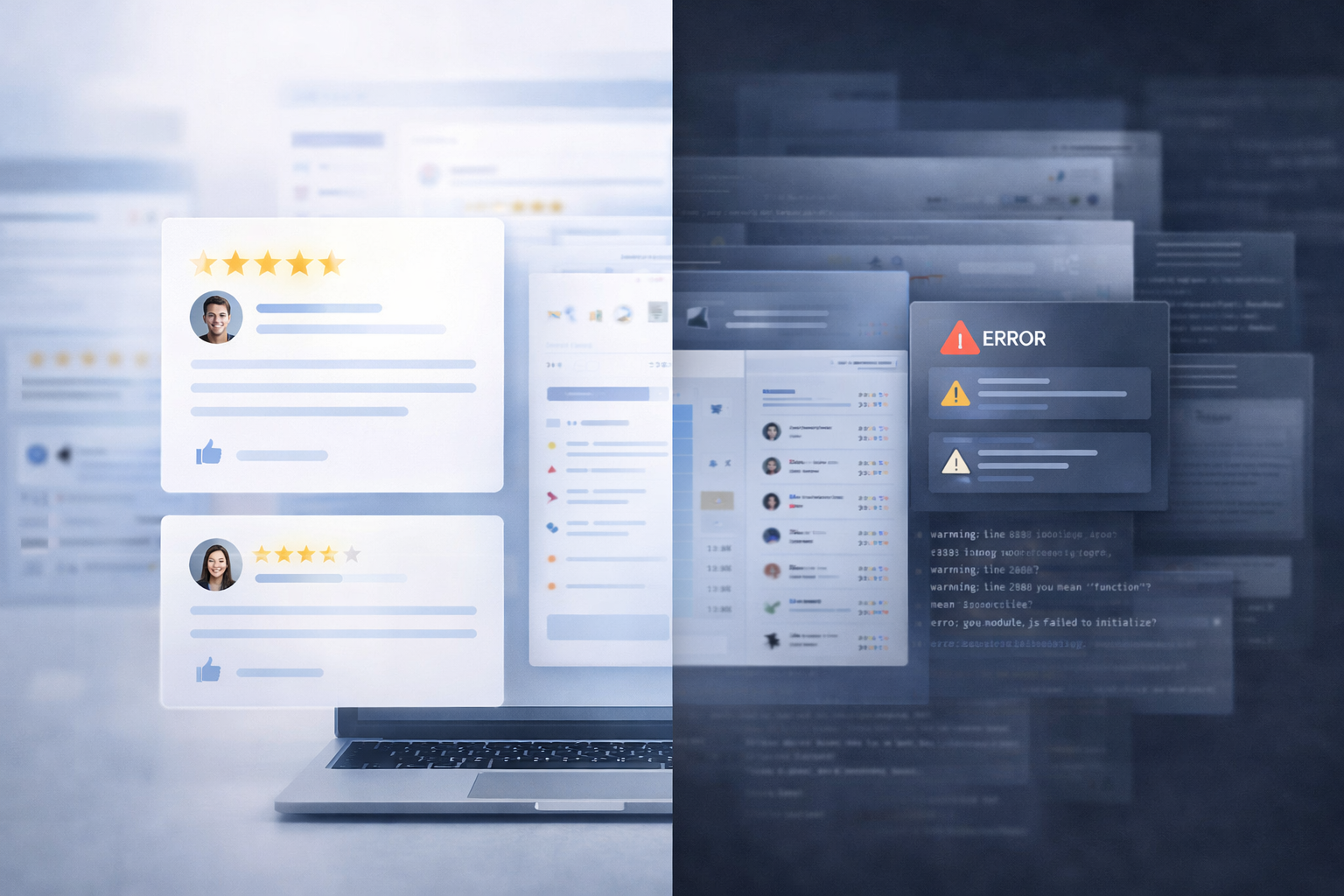
Reviews don’t need to lie to mislead you.
They just:
highlight the good parts
simplify the decision
skip long-term reality
This creates a clean story
that doesn’t match messy real life.
Example: ClickUp Reviews vs Reality
Many ClickUp reviews say:
powerful features
everything in one place
great for teams
All true.
But what’s often missing:
complexity overload
learning curve
setup fatigue
So the review is accurate.
But incomplete.
And that’s where decisions go wrong.
The Highlight Bias
Most reviews focus on:
first impressions
setup experience
visible features
But ignore:
3 months later
team frustration
workflow friction
This creates a distorted view.
The tool looks great at the beginning
but heavy over time.
The Context Problem
Every review is written from a specific situation:
a specific team
a specific workflow
a specific skill level
But readers assume:
“This will work for me too”
That’s not always true.
What feels simple for one team
can feel exhausting for another.
The Hidden Incentive Problem
Many reviews are written to convert.
Not necessarily to help.
This doesn’t mean they lie.
It means:
negatives are softened
tradeoffs are minimized
conclusions are simplified
The goal is clarity.
But real decisions aren’t clear.
Why You Still Feel Unsure After Reading Reviews
After reading multiple reviews, you often feel:
informed
but not confident
That’s because reviews help you compare.
But they don’t help you commit.
And commitment is where doubt appears.
What Honest Reviews Should Include
A truly helpful review should:
explain tradeoffs clearly
show who the tool is NOT for
describe long-term experience
mention real friction
Not just features.
Not just benefits.
But reality.
How to Read Reviews the Right Way
Instead of asking:
“Is this tool good?”
Ask:
What problems will this tool create later?
What friction will I deal with daily?
Does this match how I actually work?
Reviews are a starting point.
Not the decision.
FAQ
Q: Can tool reviews be trusted?
Yes, but they are often incomplete. They show features, not long-term experience.
Q: Why do reviews feel misleading?
Because they simplify complex decisions and ignore real-world usage.
Q: Should I rely on reviews to choose tools?
Use them as guidance, but always consider your own workflow and needs.
Final Thoughts
Reviews don’t lie.
They just stop too early.
They show what a tool can do —
but not what it will demand from you.
Real clarity doesn’t come from more reviews.
It comes from better questions.
Not:
“Is this tool good?”
But:
“What will it feel like to use this every day?”