

The Psychological Cost of Too Many Tools in Remote Teams
Quick Navigation ✔
ToggleLate last year, I was reviewing our company’s operations,
trying to figure out why a team of highly talented,
well-compensated professionals was constantly missing deadlines.
Everyone was exhausted.
Everyone was “busy.” Yet, meaningful, deep work was rarely getting done.
I initially thought we had a motivation problem.
Then, I thought we had a process problem.
But when I actually sat down and tracked a typical Tuesday for one of our core team members,
the truth hit me.
It wasn’t a lack of effort.
It was a complete and total fragmentation of attention.
We were torturing our own team with the very tools we bought to help them.
This is the quiet crisis happening in almost every remote company today.
We talk endlessly about the financial cost of SaaS sprawl,
but we rarely discuss the much heavier price:
the psychological cost of having too many tools.
Before you add another tool to your stack, pause for a second.
Most teams don’t fail because they lack tools.
They fail because they have too many — poorly connected, poorly used, and poorly understood.
After reviewing dozens of SaaS setups and AI workflows, one pattern keeps showing up:
More tools ≠ better results.
In fact, in most cases, it leads to:
– Higher costs
– Slower workflows
– More confusion across teams
This guide isn’t about adding more tools.
It’s about understanding what’s actually necessary — and what’s silently hurting your productivity.
Latest ToolRelief Guides, Hubs, and Decision Tools
Explore the newest ToolRelief resources for AI tools, cybersecurity, VPN decisions, hosting deals, software risk, and smarter tool stack choices.
Latest from ToolRelief
Fresh guides, research notes, and practical SaaS waste insights.
 ResearchSep 1, 2026Travel Disruption 2026: Rights, Delays, EES & ETIASFlight disruption, passenger rights, and European entry systems all changed materially around 2026. This benchmark separates...
 ResearchSep 1, 2026Travel Cost Leakage 2026: Fees, FX & Real Trip CostsThe price you first see is not always the price your trip ultimately carries. This report...
 GuideSep 1, 2026Travel Booking Friction 2026: Why Booking Gets HarderTravel booking friction is rarely caused by one bad website. It emerges when inventory, prices, contract...
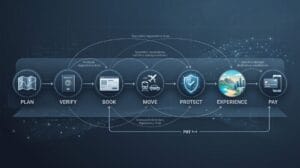 GuideSep 1, 2026Travel Decision Stack: Plan, Verify, Book & BeyondTravel decisions are not independent. Entry requirements affect booking risk, arrival airports affect ground transport, fare...
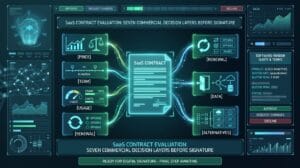 ResearchAug 29, 2026SaaS Contract Negotiation: Pricing & Terms Before SigningA strong SaaS contract is more than a discounted quote. Use this pre-signature framework to negotiate...
 ResearchAug 29, 2026Best Time to Buy Software: Buy Now or Wait?Should you buy software now or wait for a better price? This decision framework weighs current...ResearchSep 1, 2026Travel Disruption 2026: Rights, Delays, EES & ETIASFlight disruption, passenger rights, and European entry systems all changed materially around 2026. This benchmark separates...ResearchSep 1, 2026Travel Cost Leakage 2026: Fees, FX & Real Trip CostsThe price you first see is not always the price your trip ultimately carries. This report...GuideSep 1, 2026Travel Booking Friction 2026: Why Booking Gets HarderTravel booking friction is rarely caused by one bad website. It emerges when inventory, prices, contract...GuideSep 1, 2026Travel Decision Stack: Plan, Verify, Book & BeyondTravel decisions are not independent. Entry requirements affect booking risk, arrival airports affect ground transport, fare...ResearchAug 29, 2026SaaS Contract Negotiation: Pricing & Terms Before SigningA strong SaaS contract is more than a discounted quote. Use this pre-signature framework to negotiate...ResearchAug 29, 2026Best Time to Buy Software: Buy Now or Wait?Should you buy software now or wait for a better price? This decision framework weighs current...
Explore ToolRelief
Calculators, audits, templates, playbooks, and decision tools.
 HomeToolRelief HomeStart from the main ToolRelief hub.
 ToolsSaaS Cost Optimization ToolsFree tools for finding and reducing SaaS waste.
 AuditSaaS AuditReview your stack and identify waste signals.
 FrameworkThe SystemThe ToolRelief SaaS waste detection framework.
 CalculatorUnused SaaS License Cost CalculatorEstimate wasted spend from unused software seats.
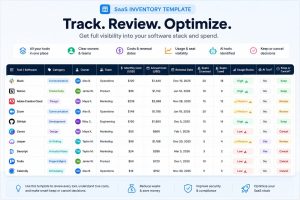 TemplateSaaS Inventory TemplateTrack tools, owners, costs, renewals, and usage.
 CalculatorsBusiness CalculatorsPractical calculators for planning and decisions.
 CalculatorBusiness Days CalculatorCount workdays, deadlines, and delivery windows.TRLiveToolRelief LiveSee what is new across ToolRelief.
 LibraryResearch LibrarySaaS waste research, patterns, and cost intelligence.
 PlaybookHidden SaaS Waste PlaybookLearn where hidden SaaS waste usually appears.
 ReviewFree SaaS Waste ReviewRequest a free review of your SaaS waste signals.HomeToolRelief HomeStart from the main ToolRelief hub.ToolsSaaS Cost Optimization ToolsFree tools for finding and reducing SaaS waste.AuditSaaS AuditReview your stack and identify waste signals.FrameworkThe SystemThe ToolRelief SaaS waste detection framework.CalculatorUnused SaaS License Cost CalculatorEstimate wasted spend from unused software seats.TemplateSaaS Inventory TemplateTrack tools, owners, costs, renewals, and usage.CalculatorsBusiness CalculatorsPractical calculators for planning and decisions.CalculatorBusiness Days CalculatorCount workdays, deadlines, and delivery windows.TRLiveToolRelief LiveSee what is new across ToolRelief.LibraryResearch LibrarySaaS waste research, patterns, and cost intelligence.PlaybookHidden SaaS Waste PlaybookLearn where hidden SaaS waste usually appears.ReviewFree SaaS Waste ReviewRequest a free review of your SaaS waste signals.
Too Many Tools Check: Where Is the Psychological Cost Showing Up?
The psychological cost of too many tools usually appears before the software budget looks broken. Use this quick check to spot where your stack is creating hidden focus debt, decision fatigue, and workflow stress.
Too many places to check
If priorities live across Slack, email, docs, dashboards, project boards, and meeting notes, the team spends energy finding work before doing work.
Too many status updates
If people must repeat the same update in multiple tools, the stack is creating coordination work instead of reducing it.
Too many notifications
If every tool demands attention, remote workers lose deep focus and spend the day reacting instead of deciding.
Too many unclear owners
If no one owns a tool, a workflow, or a source of truth, the team pays for confusion with time, trust, and attention.
Too many overlapping tools
If two or three apps solve the same job, people must constantly decide where the real work belongs.
Too many “one more app” fixes
If the answer to every workflow problem is another tool, the company is adding complexity instead of removing it.
The Promise vs. The Reality
When the remote work boom happened, the software industry sold founders a beautiful lie:
If you buy this app, your team will communicate better.
If you buy that app, you will track projects faster.
So, we bought them all.
We got Slack for real-time chat, Jira for issue tracking, Asana for marketing, Notion for documents,
Google Drive for storage, and Zoom for meetings.
We expected our teams to become digital superheroes.
Instead, we turned them into full-time data routers.
When a remote worker has to check four different inboxes just to figure out what their priority is for the day,
they are not doing the job you hired them to do.
They are managing the infrastructure of their job.
The One More App Fallacy
Psychologists have a term for what happens when you rapidly jump from one task to another:
Context Switching.
Every time an employee stops writing a complex proposal to answer a “quick question” on Slack,
and then tabs over to update a ticket in a project manager, their brain pays a cognitive tax.
It takes the average human brain roughly 23 minutes to fully regain deep focus after an interruption.
Now, multiply those 23 minutes by the 50 to 60 notifications a remote worker gets across six different apps every single day.
The math is horrifying. We are essentially forcing our teams to run a mental marathon in quicksand.
By 2:00 PM, decision fatigue sets in.
The brain is fried not from solving complex business problems,
but from the micro-decisions required to navigate a bloated software stack.
The Anxiety of the Unread Badge
There is also a deep, unspoken anxiety that comes with tool overload.
It is the fear of missing something critical because it was buried in the wrong platform.
Was that client feedback left as a comment in the Google Doc, or was it a direct message?
Did the designer update the status in the Kanban board, or did they just mention it in the weekly meeting?
This ambiguity breeds paranoia.
It creates a toxic culture where remote workers feel they must be “always on,”
constantly refreshing tabs just to prove they are working. This is the fast track to burnout.
When your tech stack requires a 20-page manual just to explain how the team should talk to each other,
your tools have failed you.
The "One More App" Fallacy
The most tragic part of this cycle is how founders usually try to fix it.
When we realize our teams are overwhelmed by five apps,
we ironically look for a sixth app to integrate the other five.
We buy another AI wrapper or an expensive automation tool hoping it will magically untangle the mess we created.
It never works. You cannot out-software bad organizational design.
Returning to Sanity: Fewer Tools, Clearer Work
I didn’t start my career to manage software subscriptions,
and I certainly didn’t hire brilliant minds to watch them drown in notifications.
Fixing this doesn’t require a new software integration.
It requires subtraction.
It requires a leadership decision to say:
“We are going to do fewer things, in fewer places.”
At ToolRelief, we advocate for auditing and cutting costs,
but the deeper mission is much more human.
It is about reclaiming our mental bandwidth.
It is about allowing a writer to just write, a coder to just code, and a designer to just design,
without the anxiety of ten glowing red dots begging for their attention.
Productivity isn’t about how many apps you can connect.
It’s about how much noise you can eliminate.
And right now, the most profitable thing you can do for your remote team is to log them out of the chaos.
Source: Dr. Gloria Mark, University of California, Irvine — research on attention and interruption recovery time.
Not every problem needs a new tool. Sometimes, the best upgrade is removing one.
The Hidden System Behind Tool Overload
Most teams assume tool overload is a tool problem.
It’s not.
It’s a decision system problem.
After working with multiple remote teams and analyzing dozens of SaaS stacks,
one pattern becomes painfully clear:
Tools don’t create chaos on their own.
Decisions do.
Every new tool enters your stack through a moment of friction:
– “Slack feels messy, let’s try something else.”
– “Our tasks are scattered, let’s add a new project manager.”
– “We need better visibility, let’s integrate another dashboard.”
Individually, each decision feels rational.
Collectively, they create fragmentation.
This is what I call “Stack Drift.”
It’s the slow, invisible process where your tool stack grows without a clear system governing it.
And once it starts, it compounds.
A new hire joins → they bring their preferred tools.
A manager struggles → they introduce a workaround tool.
A team hits a bottleneck → they patch it with another app.
No one steps back to ask:
“Should this tool exist at all?”
Instead, teams optimize around tools that shouldn’t be there in the first place.
This is why most “productivity stacks” become self-defeating.
They are not designed systems.
They are accumulated decisions.
And accumulated decisions create cognitive debt.
Every tool adds:
– A new login
– A new notification stream
– A new mental model
– A new place where information might live
Now multiply that across 6–10 tools.
What you get is not a system.
You get a maze.
And the real cost of that maze is not time.
It’s attention.
Because every time a team member asks:
“Where should I check this?”
“Where was that shared?”
“Is this updated here or there?”
They are not working.
They are navigating.
This is the part most founders miss.
They measure output.
They track deadlines.
They monitor performance.
But they don’t measure:
Decision friction.
And decision friction is what slowly kills velocity.
The best teams don’t have more tools.
They have fewer decisions.
They operate on clear rules like:
– “One tool for communication.”
– “One source of truth for documents.”
– “No new tools without removing one.”
This is not about minimalism.
It’s about cognitive clarity.
Because in the end, productivity is not about how many tools you connect.
It’s about how little your brain has to think about them.
 Read this article on Flipboard:
[Here]
Related ToolRelief Resources
FAQ
Q: What is the psychological cost of too many tools?
A: The psychological cost of too many tools is the hidden mental load created by constant context switching,
repeated decisions, unclear ownership, notifications, and scattered work across too many apps.
Q: How do I reduce tool overload in a remote team?
A: Start by identifying which tools solve the same job.
Then choose one source of truth, one owner, and one primary workflow for each important function before adding another app.
Written by Waleed Al-Qasem
Founder of ToolRelief.
I write about the intersection of technology, remote work, and human productivity.
My mission is to help teams eliminate digital noise and get back to doing deep, meaningful work.
If your workflow feels heavier with AI…
You don’t need another tool.
You need less.
Explore ToolRelief to simplify your stack and regain control.