
SaaS Integration Tax: 3 Reasons to Ditch Zapier in 2026
Quick Navigation ✔
ToggleThe SaaS integration tax is the most brilliantly executed financial scam in modern B2B operations.
I recently reviewed a startup’s operational budget and noticed a $1,400 monthly charge
for a popular third-party automation tool.
I asked the founder what this tool was doing.
The answer? It was simply taking a lead’s email from a form and pasting it into their CRM.
Think about that. They were paying for the form.
They were paying for the CRM.
And they were paying a middleman a massive premium just to let those two paid tools talk to each other.
If you are a COO or a founder in 2026,
you must realize that the era of relying on third-party connectors
(like Zapier or Make) as your default infrastructure is over.
These platforms have stopped being helpful bridges; they have become aggressive toll booths.
It is time to address the silent leak in your budget and eliminate the middlemen.
The Rise of the SaaS Integration Tax
How did we get here? Ten years ago, software did not communicate.
If you wanted your email marketing tool to sync with your sales dashboard, you needed a developer.
Third-party automation platforms swooped in and solved a massive headache by offering “no-code” visual builders.
But the trap was set.
Once your entire operational workflow depends on a third-party connector,
you are hit with the SaaS integration tax.
You are charged per “task” or “run.”
As your business scales and your data volume grows, your automation bill skyrockets exponentially,
completely disconnected from any actual value created.
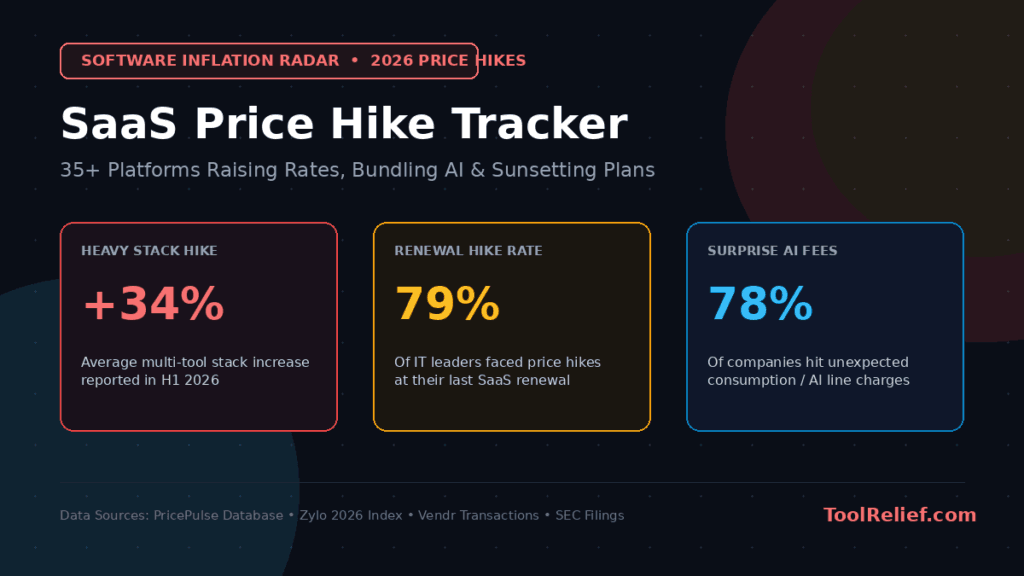
This is why SaaS is so expensive today.
You are not paying for better features; you are paying a penalty for having a successful, high-volume business.
Middlemen vs. Native APIs: The 2026 Showdown
The controversial truth that the automation cartel does not want you to know is this:
You no longer need them for 80% of your workflows.
In 2026, almost every serious B2B software offers robust Native APIs and Webhooks right out of the box.
A Webhook is simply a way for an app to provide other applications with real-time information.
It is instant, it is native, and most importantly, it is free.
When you compare Middleman Connectors vs.
Native APIs, the choice becomes a no-brainer for lean operations:
Third-Party Connectors:
Delayed syncing, strict task limits, premium app fees,
and massive security vulnerabilities (you are giving a third party access to your entire database).Native Webhooks/APIs:
Instant real-time data transfer, zero volume limits, no middleman, and complete data ownership.
3 Ways the Integration Cartel Traps You
The business model of third-party connectors relies heavily on the exact same psychological
and operational traps we see in the AI models competition for users.
They do not want you to build an efficient system; they want you dependent.
1. The “Premium App” Extortion
You sign up for a reasonable tier,
only to discover that syncing data to your specific CRM or accounting software requires a “Premium” connection.
Suddenly, your $30/month bill jumps to $150/month.
This is a classic example of dark patterns in SaaS renewals,
where the true cost of the software is intentionally hidden until you are already halfway through building your workflow.
2. The Task Volume Penalty
Every time a customer updates their profile, it counts as a “task.”
If a viral marketing campaign brings in 10,000 new leads in a day,
your automation platform will likely pause your account and demand an immediate,
exorbitant upgrade to process the backlog. You are being penalized for growth.
3. Deep Operational Hostage-Taking
If you build 50 complex workflows in a proprietary visual builder, migrating away becomes a nightmare.
This is the ultimate form of vendor lock-in.
Your business logic is trapped in their interface.
If they double their prices tomorrow, you will pay it,
because rewriting those automations from scratch would paralyze your company.
How to Reclaim Your Data Pipeline
To survive and scale without bleeding cash,
you must execute a ruthless audit of your SaaS stack specifically focused on how data moves.
Step 1: Audit the Middlemen
Identify every workflow currently running through a third-party connector.
You will likely find dozens of Zombie Automations—processes built by employees who left the company long ago,
continuing to fire and consume your paid task limits.
Step 2: Hunt for Native Integrations
Check the settings of your core apps. Does your form builder have a native,
direct integration with your CRM? Turn it on and delete the third-party middleman instantly.
Step 3: Leverage Webhooks and Open-Source
For the connections that require custom routing, instruct your tech lead to use direct Webhooks.
If you absolutely need a visual builder for complex, multi-step logic,
pivot to open-source or self-hosted alternatives like n8n.
You host it on your own server, completely bypassing the volume-based SaaS integration tax.
Stop renting access to your own data.
The tools you pay for should work for you, not charge you a toll every time they speak to each other.
Cut the middleman, protect your margins, and build a workflow that actually scales.
Sources & References
Harvard Business Review:
Stop Wasting Money on Software You Don’t Use
(A deep dive into how B2B companies leak budget through unoptimized SaaS architectures).
 Read this article on Flipboard:
[Here]
Written by Waleed Al-Qasem
Founder of ToolRelief.
I write about the intersection of technology, remote work, and human productivity.
My mission is to help teams eliminate digital noise and get back to doing deep, meaningful work.
If your workflow feels heavier with AI…
You don’t need another tool.
You need less.
Explore ToolRelief to simplify your stack and regain control.