
- Decision
- Identify where hybrid-work software growth, overlapping tools, fragmented ownership, and changing seat demand can inflate recurring software spend.
- Evidence Basis
- Documented software-spend patterns, utilization and overlap considerations, comparative analysis, and the assumptions and examples presented on this page.
- Best Used For
- Reviewing hybrid-work software portfolios before renewal, consolidation, license-rightsizing, or stack-standardization decisions.
- Decision Boundary
- Actual utilization and savings depend on contracts, workforce behavior, deployment patterns, current pricing, and operational requirements. Validate decisions against current internal usage and vendor terms.
Hybrid Workforce Software Inflation 2026: The Hidden Drain on Distributed Teams
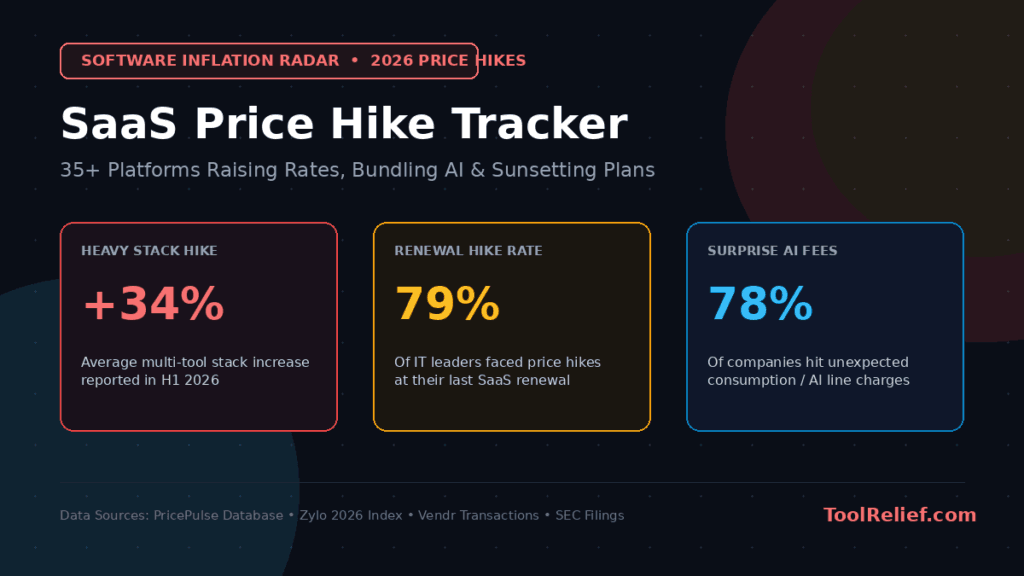
Economic shifts in 2026 have fundamentally reshaped how international companies manage technology expenditure and remote operations. As distributed organizations expand across borders, corporate finance leads face an unprecedented compounding crisis: hybrid workforce software inflation 2026.
While distributed setups promise reduced physical overhead, the hidden operational friction—spanning overlapping software stacks, unmonitored seat licenses, and uncoordinated travel logistics—is quietly eroding profit margins across US and European markets.
The 2026 SaaS Economic Shift: The $3,400 Per-Employee Reality
Recent data from enterprise spend audits reveals that the average mid-market remote enterprise now spends over $3,400 per employee annually strictly on software subscriptions. However, up to 28% of that capital represents absolute financial waste.
| Category | Waste Metric / Financial Leakage |
|---|---|
| Unassigned / Zombie Licenses | 14% of total enterprise SaaS budget |
| Redundant AI & App Overlap | 9% in duplicated functional tools |
| Cross-Border FX & Seat Taxes | 5% in stealth currency & SSO markups |
The issue is no longer just simple price increases; it is structural compounding. When teams operate across multiple time zones, decentralized managers routinely procure overlapping tools without centralized oversight.
To analyze your team’s exact leakage exposure, run your current setup through our SaaS Cost Benchmark Tool to evaluate spend efficiency against verified industry baselines.
The Hidden Drivers of Hybrid Workforce Software Inflation in 2026
To mitigate budget erosion, financial decision-makers must identify the specific mechanisms accelerating software inflation across remote and hybrid architectures:
- The Proliferation of Zombie Licenses: When employee offboarding fails to synchronize with cloud identity systems, seat subscriptions continue billing automatically. In high-turnover remote environments, unassigned accounts stay active for an average of 4.2 billing cycles before discovery. You can calculate the precise cost of inactive seats using our Unused SaaS License Cost Calculator.
- Feature Stripping & Tier Drift: Vendors increasingly move core functionality—such as Single Sign-On (SSO), advanced audit logs, and API access—into enterprise tiers. This forces growing startups to upgrade to tiers costing 200% to 300% more per user, simply to maintain basic compliance and security standards.
- Usage-Based API & AI Billing Overruns: Autonomous AI workflows and generative copilots are frequently tied to variable usage billing. Without hard spend caps, programmatic agent loops and data queries routinely trigger massive invoice spikes at the end of billing cycles.
Case Study: Quantifying Distributed Tech & Operations Waste
In early 2026, a 45-person distributed technology agency operating across North America and Europe performed a comprehensive stack audit.
| Metric / Audit Action Item | Financial Impact (USD) |
|---|---|
| Initial Annual SaaS & Travel Ops Spend | $214,000 |
| Unassigned Seat Reclamation | -$28,400 |
| Consolidated AI Stack Removal | -$14,200 |
| Travel & Logistics Realignment | -$11,800 |
| Optimized Annual Tech Expenditure | $159,600 (25.4% Direct Net Savings) |
By systematically identifying duplicated licenses and consolidating operational workflows, the organization eliminated over $54,400 in annual burn without sacrificing team performance or operational speed.
Executives looking for a structured blueprint to execute a similar audit can review our complete framework inside the SaaS Cost Optimization Tools command hub.
Synchronizing Distributed Operations: SaaS Spending Meets Travel Logistics
Managing a global hybrid team extends far beyond internal software tools. Modern distributed companies frequently bring remote employees together for quarterly offsites, client meetings, and strategic summits.
When travel execution is handled separately from technology planning, costs spike dramatically. FX fee markups, inefficient booking platforms, and poor travel management apps compound operational inefficiency.
Software Intelligence
SaaS Audit Tools & Seat Calculators
Travel Logistics
Flight, Stays, Transport & eSIMs
To streamline mobile logistics, remote executives and traveling teams rely on our specialized Travel Booking & Resource Hub, providing direct comparison matrixes for flights, accommodations, ground transport, and international connectivity.
Furthermore, remote teams traveling across Europe or managing global relocations must stay compliant with updated international entry systems. Review current guidelines on our Visa Services & Entry Requirements reference page.
A 4-Step Action Plan to Defeat Software Inflation in 2026
To regain control over technical overhead and operational spend, implement this four-phase defense protocol immediately:
| Phase | Operational Action | Primary Tool / Asset |
|---|---|---|
| Step 1 | Audit Active Inventory | Audit Portal |
| Step 2 | Calculate Inactive Seats | SaaS License Cost Calculator |
| Step 3 | Standardize Travel Ops | Travel Command Hub |
| Step 4 | Review Partner Routes | Verified Partner Offers Directory |
Step 1: Execute a Zero-Based Stack Audit
Catalog every paid application across all departments. Do not rely solely on accounting records; cross-reference active single sign-on logs with credit card statements to detect shadow IT applications purchased on expense reports. Execute a complete evaluation via our Audits Portal.
Step 2: Establish Seat Ownership & Renewal Windows
Assign a single owner to every SaaS tool. Require formal usage reviews 60 days before any automatic renewal date to avoid getting trapped in annual lock-in contracts for seats no longer required.
Step 3: Consolidate Redundant Toolsets
If your team uses three separate apps for project management, document storage, and video messaging, standardize on a single unified platform. Consolidating your stack reduces both financial cost and cognitive overhead.
Step 4: Leverage Verified Market Deals
Before renewing software contracts at inflated rack rates, check for verified vendor promotions and approved partner programs. You can discover validated routes and commercial discounts inside our Verified Partner Offers Directory.
The Path Forward: Total Operational & Spend Clarity
As hybrid workforce software inflation 2026 continues to squeeze margins, passive spend management is no longer viable. Companies that proactively audit software inventory, streamline AI tools, and align travel logistics will maintain lean, highly profitable operations.
Take direct control of your business costs today. Leverage our interactive intelligence engines to audit your stack, benchmark expenses, and eliminate operational waste across your organization.