Last verified: September 1, 2026
Travel Booking Friction Report 2026
Quick Navigation ✔
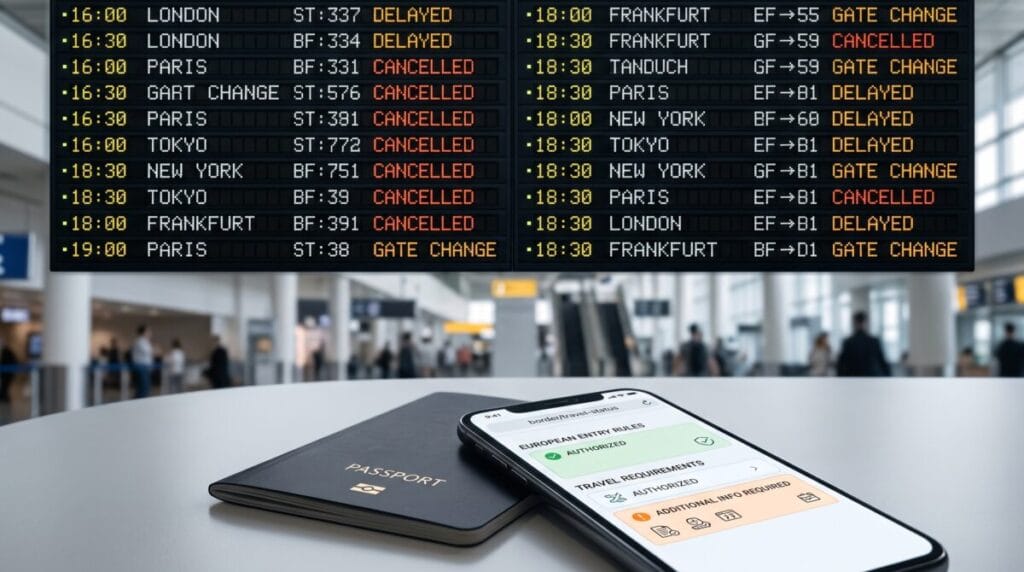
ToggleTravel booking friction is what happens when finding a trip is easy but comparing, understanding, completing, changing, or recovering that trip is not.
It is tempting to blame one booking website. The deeper problem is structural.
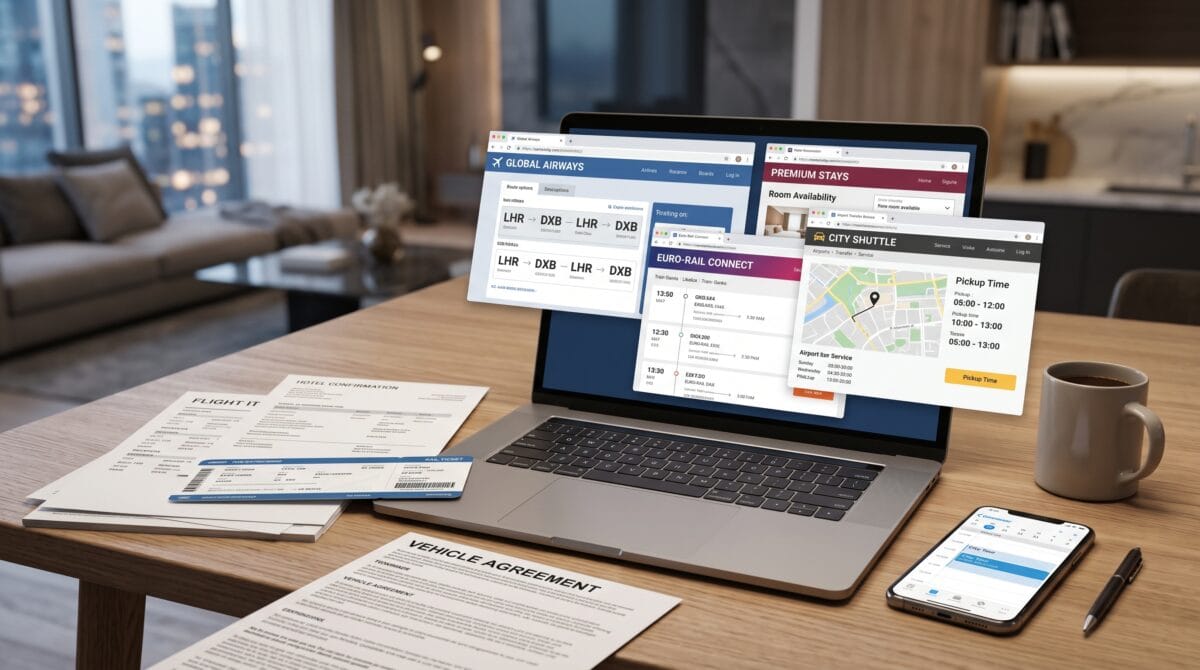
A flight can be distributed through several channels with different product detail. A hotel can show the same room through several rate structures. A European rail journey may require multiple operators and contracts. An airport transfer can depend on a specific terminal, pickup policy, and flight-delay rule. A car-rental intermediary may sell the reservation while a separate rental company controls the actual contract. A tour can depend on a time slot, meeting point, cancellation cutoff, and local operator.
Viewed separately, these look like six different booking problems.
Viewed together, ToolRelief finds the same three mechanisms repeating:
- distribution fragmentation — the same journey is assembled through systems that do not always expose identical information;
- offer and rule complexity — the visible price does not fully describe flexibility, inclusions, conditions, or downstream dependencies;
- responsibility fragmentation — the company that sold the booking may not be the company operating, servicing, refunding, or resolving it.
The booking problem is often not finding an option. It is determining whether two visible options actually represent the same product, the same rights, and the same recovery path.
This report explains those mechanisms across flights, hotels, rail and ground transport, airport transfers, car rental, and tours and activities without ranking booking platforms or inventing a cross-category friction score.
Travel Booking Friction — Quick Answer
Travel booking friction increases when a traveler must compare products whose inventory, inclusions, rules, seller responsibilities, or connection dependencies are not aligned.
The problem appears differently by category:
| Booking Category | Main Friction | What the Headline Price May Not Tell You | What Must Be Verified |
|---|---|---|---|
| Flights | Distribution and fare-product fragmentation | Baggage, seat, flexibility, servicing path, bundle content | Fare conditions and total required configuration |
| Hotels | Rate and cancellation-rule variation | Mandatory vs optional charges, refundability, payment timing | Total price and rate terms |
| Rail / Ground Transport | Multiple operators and ticket contracts | Whether separate legs form one protected journey | Ticket structure and connection protection |
| Airport Transfers | Operational-detail dependence | Pickup point, waiting time, delay handling, luggage capacity | Arrival process and service conditions |
| Car Rental | Contract and intermediary complexity | Insurance, deposit, fuel, mileage, drivers, border rules | Who provides the car and which contract controls |
| Tours & Activities | Inventory and schedule dependence | Meeting point, admission, cancellation cutoff, local supplier | Exact product, slot, operator, and change terms |
There is no credible public dataset that scores those categories on one universal scale. ToolRelief therefore treats this as a Report, not an Index.
The Three Structural Causes of Travel Booking Friction
1. Distribution Fragmentation
A travel product can be created by one company, distributed by another, aggregated by another, and eventually serviced by the original supplier—or by an intermediary.
Air travel is the clearest example.
The International Air Transport Association's New Distribution Capability, or NDC, is itself designed to address what IATA describes as limitations in existing airline distribution, including access to full and rich airline content and the quality of the shopping experience.
NDC enables airlines and travel sellers to exchange offers and orders through modern data standards. IATA's wider airline-retailing program is simultaneously moving the industry toward dynamically generated offers rather than relying only on older static fare and booking-class structures.
That technological transition can improve retailing, but it also explains why travelers should not assume that every sales channel necessarily presents an offer in the same form at the same moment.
Different channels can expose:
- different bundles;
- different ancillary detail;
- different servicing capabilities;
- different product attributes;
- or different combinations of the same underlying itinerary.
The decision should therefore compare the offer, not just the flight number.
2. Offer and Rule Complexity
Travel prices are increasingly composed of a core product plus conditions.
The U.S. Government Accountability Office highlighted this problem in its 2026 airline-competition analysis. GAO noted that base airfare data does not capture all ancillary services travelers may pay for, including checked bags, preferred seats, extra legroom, food, Wi-Fi, and change or cancellation fees.
This means two fares that look directly comparable can describe different economic products.
The same principle applies outside aviation.
A hotel rate can differ by:
- refundability;
- payment timing;
- meal inclusion;
- occupancy;
- mandatory property charges;
- or cancellation deadline.
A car rental can differ by:
- fuel policy;
- mileage;
- deposit;
- driver conditions;
- insurance structure;
- and permitted geography.
The friction appears when the traveler compares the labels before normalizing the underlying rules.
3. Responsibility Fragmentation
The seller and the operator are not always the same entity.
This matters most when something changes.
A traveler may book through:
- an airline or hotel directly;
- an online travel agency;
- a ticket vendor;
- a rail aggregator;
- a car-rental broker;
- a tour marketplace;
- or another intermediary.
The key question is not whether intermediaries are inherently better or worse.
It is:
Who owns the contract, who controls the inventory, and who has authority to change or refund the booking?
That answer can differ by category and booking structure.
Why Do Flight Prices and Offers Look Different Across Booking Channels?
Because a flight is no longer just a seat attached to one static fare.
Modern airline retailing increasingly includes:
- fare families;
- baggage;
- seat attributes;
- change rights;
- refundability;
- priority services;
- Wi-Fi or onboard products;
- and dynamically assembled bundles.
IATA's current NDC documentation explicitly describes the standard as a way to address distribution limitations involving product differentiation, access to richer airline content, and shopping transparency.
IATA is an airline-industry organization rather than a consumer regulator, so ToolRelief uses that documentation here to explain the technical structure of airline distribution—not as evidence that every NDC implementation is better for every traveler.
The Base Fare Is Not the Full Comparison
GAO's 2026 airline-competition report provides an important empirical boundary.
Its airfare analysis had to account separately for baggage and reservation-cancellation fees because the base-fare dataset does not include all ancillary services.
GAO also says it could not incorporate every ancillary category, including seat selection, food and drink, and Wi-Fi.
That matters to an ordinary traveler because the lowest initial fare can stop being the lowest relevant fare once the traveler adds the configuration they actually need.
ToolRelief therefore treats flight-search friction as a normalization problem:
same dates + same airports + same cabin + same baggage + same seat/flexibility requirement + same payment conditions.
Only then is a price comparison close to like-for-like.
When you are ready to perform that comparison rather than analyze the structure behind it, use ToolRelief's Flight Search & Comparison Tools.
Did the US Fix Airline Ancillary-Fee Booking Friction?
Not in the way many older travel articles now imply.
The U.S. Department of Transportation issued a major ancillary-fee disclosure rule in April 2024.
That rule was later vacated by the U.S. Court of Appeals for the Fifth Circuit.
On July 2, 2026, DOT issued a final rule implementing the court's vacatur and restoring the ancillary-fee disclosure regulations that existed before the 2024 rule, returning to standards established in 2011.
| Airline Fee Rule Stage | Date | Status in September 2026 | Booking-Friction Meaning |
|---|---|---|---|
| 2011 ancillary-fee framework | 2011 | Restored current framework | Forms the current federal disclosure baseline after the 2024 rule was vacated |
| Enhanced ancillary-fee disclosure rule | April 24, 2024 | Vacated | Should not be cited as today's operative federal shopping rule |
| DOT restoration rule | July 2, 2026 | Current | Implements the vacatur and returns federal regulation to the pre-2024 standards |
This is a useful example of why booking-friction research has to be date-stamped. A regulation can be accurately described in a 2024 article and be materially wrong two years later.
Why Does Hotel Booking Still Create Friction Even With Upfront Total Pricing?
The hotel problem changed materially in 2025.
The Federal Trade Commission's Rule on Unfair or Deceptive Fees became effective on May 12, 2025.
For covered short-term lodging, the rule requires businesses that advertise a price to display the total price upfront, including mandatory fees the business knows and can calculate at that stage.
The total must be presented more prominently than other pricing information.
That addresses one major form of hotel-shopping friction: comparing a lower headline rate with another property's price only to discover later that the first property adds a required charge.
Did the FTC Ban Resort Fees?
No.
The FTC rule does not ban a particular type or amount of fee.
It regulates deceptive price presentation.
Government charges and genuinely optional products or services can also be treated differently from mandatory charges under the rule.
So hotel booking still requires more than reading the largest number on the page.
A useful hotel comparison needs to align:
- total mandatory price;
- room type;
- occupancy;
- payment timing;
- refundability;
- cancellation cutoff;
- and included services.
The FTC improved the visibility of mandatory total pricing in the United States. It did not make every hotel rate interchangeable.
When the question becomes which booking path or accommodation option fits the trip, continue to ToolRelief's Hotel Booking & Accommodation Comparison.
Why Is Cross-Border Rail Booking Still Fragmented in Europe?
This is one of the strongest current examples of structural travel booking friction because the European Commission explicitly identified the problem in 2026.
On May 13, 2026, the Commission proposed a package intended to simplify regional, long-distance, cross-border, and multimodal booking.
The Commission said that:
- comparing available travel options remains difficult;
- travelers encounter obstacles when combining different transport services;
- multi-leg rail journeys involving tickets from different companies can be complex;
- booking systems remain fragmented;
- and passenger protection can be limited when a journey consists of multiple tickets from different rail operators.
That is an unusually direct official acknowledgment that booking friction is not simply a user-interface problem.
It is partly a market-structure and contract-structure problem.
Is Europe's “One Journey, One Ticket” System Active Yet?
No—not as a completed new legal framework.
The May 2026 measures are proposals going through the EU legislative process.
The Commission's stated goal is to make it easier for passengers to find, compare, and buy travel across multiple operators through a single transaction while extending protection across the journey.
The direction is important.
But ToolRelief does not describe proposed rights as current rights.
Why Does a Through-Ticket Matter?
Under existing EU rail passenger rules, the legal structure of the ticket can affect protection after a missed connection.
A journey protected as one through-ticket is not necessarily equivalent to several independently contracted tickets that happen to appear together in one itinerary.
That distinction turns a booking-interface question into a recovery question:
Does the itinerary only look like one journey, or is it contractually protected as one journey?
When comparing actual rail and bus options after understanding that distinction, use ToolRelief's Ground Transport, Train & Bus Booking.
Why Do Airport Transfer Bookings Fail Differently?
Airport transfers have less public regulatory data than commercial aviation or rail, so ToolRelief does not manufacture a transfer-friction statistic.
The category is still structurally useful because the service depends on information that a headline price cannot describe alone.
A transfer decision can depend on:
- the exact airport and terminal;
- pickup versus meeting-point rules;
- flight-number monitoring;
- waiting-time policy;
- what happens after a delay;
- vehicle and luggage capacity;
- late-night availability;
- child-seat requirements;
- and cancellation timing.
Two transfer products can therefore have similar prices but different resilience to the same delayed arrival.
The Flight Creates the Transfer Constraint
This is an important dependency.
The transfer does not exist independently from:
- the arrival airport;
- scheduled arrival time;
- immigration and baggage time;
- terminal geometry;
- and flight reliability.
That means a traveler cannot judge a transfer only from the vehicle and price.
The booking has to be tested against the flight that feeds it.
For execution, use ToolRelief's Airport Transfer Booking Options.
Why Does Car Rental Require Contract-Level Comparison?
Car rental demonstrates responsibility fragmentation particularly clearly.
The European Union's official Your Europe guidance tells travelers to distinguish between a rental company and an intermediary or broker.
An intermediary can arrange the booking without being the company that actually supplies the car.
When a dispute concerns implementation of the rental contract, responsibility can therefore sit with the rental company unless the contract says otherwise.
Online Booking Does Not Automatically Mean a 14-Day Cooling-Off Period
Your Europe also makes a point that can surprise travelers accustomed to other online purchases:
An EU car-rental booking does not automatically carry the normal 14-day distance-selling cancellation right.
Cancellation depends on the rental company's own terms unless another right applies.
The booking should therefore be judged before payment on:
- cancellation rules;
- deposit;
- fuel policy;
- included mileage;
- driver requirements;
- insurance and excess;
- cross-border permissions;
- vehicle class;
- pickup conditions;
- and return conditions.
Official EU consumer guidance also says the traveler should understand the difference between basic third-party liability insurance and optional protection against other risks.
This is precisely why comparing only the daily rental rate produces a weak decision.
For the actual provider and booking-route decision, continue to ToolRelief's Car Rental Comparison for Travelers.
Why Do Tours and Activities Create a Different Kind of Booking Friction?
Tours and activities do not have one government dataset equivalent to BTS airline performance data or a single cross-market regulator measuring booking friction.
ToolRelief therefore treats this category structurally rather than inventing statistics.
An activity booking commonly depends on a tighter operational unit than a hotel stay or airline route:
- a specific admission date;
- a specific start time;
- a meeting point;
- a minimum arrival time;
- a named local operator;
- age or participant requirements;
- weather or operating conditions;
- and a cancellation cutoff.
That creates schedule friction.
The booking may be valid, the price may be correct, and the activity may still be a poor fit because an upstream flight, train, transfer, or hotel check-in makes the time slot fragile.
Inventory Is Not the Same as Trip Fit
Seeing “available” answers one question:
Can this product currently be booked?
It does not answer:
Should this product be inserted at this point in this itinerary?
That second question requires knowledge of the trip around the activity.
When you are ready to compare actual experiences and booking routes, use ToolRelief's Tours, Activities & Experience Booking.
Supplier vs Intermediary: Who Actually Owns the Booking?
One of the most useful questions a traveler can ask before checkout is:
If something changes tomorrow, who can actually fix this?
| Booking Layer | Possible Entity | What It May Control | What to Verify Before Payment |
|---|---|---|---|
| Search / Discovery | Search engine, metasearch, marketplace | Which options are visible | Whether displayed inventory and price remain current at destination |
| Seller | Supplier or intermediary | Payment, reservation creation, some servicing | Who takes payment and who handles changes/refunds |
| Operating Supplier | Airline, hotel, rail operator, rental company, local activity operator | Actual service delivery | Supplier confirmation and operational conditions |
| Contract | One supplier or multiple parties | Cancellation, refund, liability, missed-connection protection | Whether the itinerary is one protected contract or several |
| Recovery | Seller, supplier, insurer, regulator depending on the issue | Resolution after disruption | Who must be contacted first and what evidence is required |
No universal rule says direct booking always wins.
No universal rule says an intermediary always creates more friction.
The stronger test is whether the booking path preserves:
- clear inventory;
- clear terms;
- clear responsibility;
- and a workable recovery path.
What Has Regulation Fixed — and What Has It Not?
2025 and 2026 provide unusually clear examples of governments addressing booking friction without making the entire booking system uniform.
| Area | Jurisdiction / Authority | Current Status | What It Addresses | What It Does Not Solve |
|---|---|---|---|---|
| Short-term lodging total pricing | United States / FTC | Effective May 12, 2025 | Requires covered businesses to present mandatory total pricing upfront | Does not eliminate fees or standardize cancellation terms |
| Airline ancillary-fee disclosure | United States / DOT | 2011-style standards restored July 2026 after 2024 rule vacatur | Provides the current federal ancillary-fee disclosure baseline | Does not make every distribution channel or fare bundle identical |
| Cross-border rail booking | European Union / European Commission | New measures proposed May 13, 2026 | Targets fragmented booking, multi-operator tickets, and cross-journey protection | Proposals are not yet a completed new legal framework |
| Car-rental consumer information | European Union consumer law | Current | Requires clear information and fair contract treatment | Does not create one standardized rental contract or automatic 14-day cancellation right |
The pattern is important:
Regulation can improve disclosure, rights, or responsibility. It does not eliminate the underlying differences between travel products.
Why More Booking Technology Has Not Eliminated Friction
Travel technology has solved enormous discovery problems.
A traveler can now search thousands of flights, hotels, cars, and activities in seconds.
But faster discovery does not automatically produce standardized products.
In fact, more sophisticated retailing can increase the number of attributes available for comparison.
IATA's move toward Offers and Orders illustrates that tension in aviation. Dynamic offer creation can make products more relevant, but the traveler still has to understand what has been bundled into the offer and how it can be serviced later.
The European Commission's 2026 rail proposals reveal the same problem from another direction: modern digital booking exists, yet fragmented operators and ticket contracts can still make a multi-leg journey difficult to compare and protect as one trip.
The unresolved problem is therefore not access to information alone.
It is normalization.
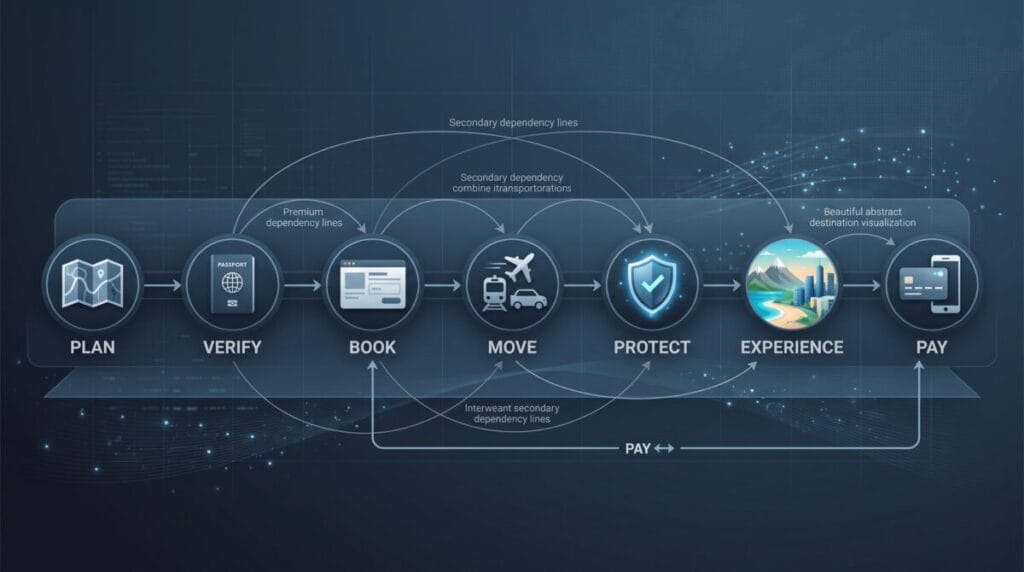
The ToolRelief Booking Friction Lens
ToolRelief uses five questions to normalize a travel booking before treating two options as comparable.
1. PRODUCT — What Am I Actually Buying?
Define the real unit:
- flight fare and inclusions;
- hotel room and rate type;
- rail journey and ticket structure;
- transfer route and operating conditions;
- rental vehicle and contract;
- activity and exact time slot.
2. PRICE — Are the Two Totals Built the Same Way?
Do not compare:
- base fare against all-in fare;
- refundable against non-refundable;
- bag-inclusive against bag-exclusive;
- mandatory-fee-inclusive against headline-only;
- unlimited mileage against capped mileage.
The purpose is not to add every possible optional extra.
It is to compare the configuration this traveler actually needs.
3. CONTRACT — What Happens If the Plan Changes?
Identify:
- cancellation deadline;
- change rules;
- refund method;
- no-show consequences;
- missed-connection protection;
- and whether several trip legs are legally one journey or several contracts.
4. RESPONSIBILITY — Who Can Resolve the Problem?
Record the roles separately:
- who sold it;
- who charged the payment;
- who operates it;
- who can modify it;
- who refunds it;
- who handles disruption.
5. DEPENDENCY — What Other Travel Decision Can Break This Booking?
A booking can be perfectly valid in isolation and fragile inside the itinerary.
Examples:
- a late inbound flight can invalidate a rigid transfer;
- a separate rail ticket can weaken missed-connection protection;
- a non-refundable hotel can magnify flight disruption;
- a rental pickup window can depend on border-processing time;
- a timed activity can depend on multiple upstream transport legs.
This fifth layer is where travel booking becomes a system problem rather than a category problem.
Cross-Category Booking Friction Matrix
| Category | Product Friction | Price Friction | Contract Friction | Responsibility Friction | Dependency Friction |
|---|---|---|---|---|---|
| Flight | Fare families and offer bundles | Base fare vs traveler-required extras | Change/refund conditions | Seller vs operating carrier | Connections and downstream reservations |
| Hotel | Room/rate combinations | Total mandatory price and optional extras | Cancellation and payment rules | Property vs booking intermediary | Arrival timing and upstream disruption |
| Rail | Operator and ticket combinations | Separate vs combined journey price | Through-ticket vs separate contracts | Ticket vendor vs rail operators | Missed connections |
| Airport Transfer | Vehicle/pickup configuration | Route, waiting and optional extras | Late-arrival and cancellation rules | Platform vs local operator | Flight and border timing |
| Car Rental | Vehicle class and availability | Daily rate vs required configuration | Fuel, deposit, mileage, cancellation | Broker vs rental company | Pickup schedule and driving geography |
| Activity | Specific product and slot | Admission, inclusions and extras | Cancellation cutoff | Marketplace vs local operator | Transport and itinerary timing |
How Should a Traveler Use This Report?
Do not respond to booking friction by opening more tabs indefinitely.
Instead, identify which layer is unresolved.
If the problem is:
- flight product normalization → move to flight comparison;
- hotel total and rate rules → move to accommodation comparison;
- multi-operator ground transport → move to train and bus booking;
- arrival logistics → move to airport transfer comparison;
- rental contract structure → move to car-rental comparison;
- timed experiences → move to tours and activities;
- the order of the entire trip → move to planning.
For the last case, use ToolRelief's Smart Trip Planner. The planner executes the trip-planning task; this report explains why unresolved booking dependencies create friction in the first place.
What This Report Does Not Claim
This report does not claim that:
- one booking website is best;
- direct booking is always superior;
- intermediaries are inherently risky;
- every OTA displays different inventory;
- every airline channel produces a different fare;
- every hotel charges mandatory fees;
- one transport category is objectively more difficult than another;
- ToolRelief measured traveler frustration in a proprietary survey;
- or that a defensible 0–100 travel-friction score currently exists.
Those claims would require evidence this research does not have.
The original ToolRelief contribution is instead the cross-category synthesis: the same product, price, contract, responsibility, and dependency problems recur in different forms across the booking journey.
Commercial & Editorial Disclosure
ToolRelief is an independent decision platform. ToolRelief may earn compensation from partner links on separate Travel decision surfaces, but those commercial relationships do not determine the structural analysis or regulatory conclusions in this report.
This report does not contain direct affiliate booking buttons and does not rank travel providers.
The preferred decision path is:
Research → relevant ToolRelief decision surface → external provider only when contextually justified.
Methodology and Limitations
Produced by ToolRelief. Last verified September 1, 2026.
This report is a ToolRelief analytical synthesis of current transport regulation, consumer-protection guidance, airline-distribution documentation, and cross-category booking structures.
ToolRelief did not run a proprietary traveler survey, scrape booking platforms to manufacture a friction score, or rank commercial booking providers.
Research Period
The fast-moving regulatory and industry material was rechecked for this draft on September 1, 2026.
Longer-lived contract and booking principles were included only where they remain useful to the 2026 decision environment.
Source Hierarchy
- government and regulatory primary sources;
- official European Union transport and consumer guidance;
- U.S. Department of Transportation and GAO material;
- industry-standard documentation where the subject is technical distribution architecture;
- ToolRelief's completed Travel research dossier;
- secondary evidence only when a primary source is unavailable and the fact materially adds value.
Why There Is No Friction Score
No comparable public dataset measures flight distribution, hotel rate rules, rail-ticket fragmentation, transfer logistics, car-rental contracts, and activity-booking conditions using a common unit.
Assigning arbitrary weights to those categories would make the result look more objective than the evidence allows.
ToolRelief therefore uses a repeatable qualitative framework—Product, Price, Contract, Responsibility, Dependency—without pretending it is a statistical index.
Limitations
- Airline distribution technology varies by airline, seller, market, and implementation.
- IATA documentation represents an airline-industry standards body and is used here to explain distribution architecture, not as independent consumer-outcome research.
- The European Commission's May 2026 booking and rail measures are proposals and must not be described as fully operative new law.
- The FTC lodging rule applies to covered US short-term lodging and should not be generalized into a worldwide hotel-pricing rule.
- Car-rental rights vary by jurisdiction and contract.
- No comparable government booking-friction dataset exists for airport transfers or tours and activities; those sections therefore use structural analysis rather than fabricated statistics.
Primary and Authoritative Sources
- International Air Transport Association — New Distribution Capability / Offers & Orders
- International Air Transport Association — Dynamic Offers
- U.S. Government Accountability Office — Airline Competition and Ancillary-Fee Analysis, 2026
- U.S. Department of Transportation — Increasing Flexibility on Disclosure of Airline Ancillary Fees, 2026 Final Rule
- U.S. Department of Transportation — Aviation Consumer Protection Final and Proposed Rules
- Federal Trade Commission — Rule on Unfair or Deceptive Fees
- European Commission — One Journey, One Ticket, Full Rights, May 13, 2026
- European Union — Rail Passenger Rights
- European Union — Hiring a Car in Another EU Country
Bottom Line
Travel booking friction is not evidence that travel websites have failed to provide enough choice.
Often, the opposite is true.
The traveler can see many options but still has to determine which options represent the same product, include the same costs, carry the same contract protections, and can be recovered through the same party if something breaks.
Flights expose distribution and fare-product complexity. Hotels expose rate and cancellation differences even after mandatory total pricing becomes clearer. European rail exposes the problem of multi-operator journeys and fragmented ticket contracts. Airport transfers expose arrival dependencies. Car rental exposes the distinction between seller and operating company. Activities expose time-slot and itinerary dependencies.
Across all six, ToolRelief's central finding is the same:
Before comparing providers, normalize the product, price, contract, responsibility, and dependency.
Once those five layers are clear, the traveler is no longer comparing booking screens.
The traveler is comparing actual travel decisions.