TOOLRELIEF TRAVEL DECISION GUIDE
Train vs Flight in Europe: Time, Cost and Booking Flexibility
Train versus flight is not a mode-level contest. It is a corridor decision built from origin access, terminal processing, scheduled travel, arrival location and the recovery options after disruption.
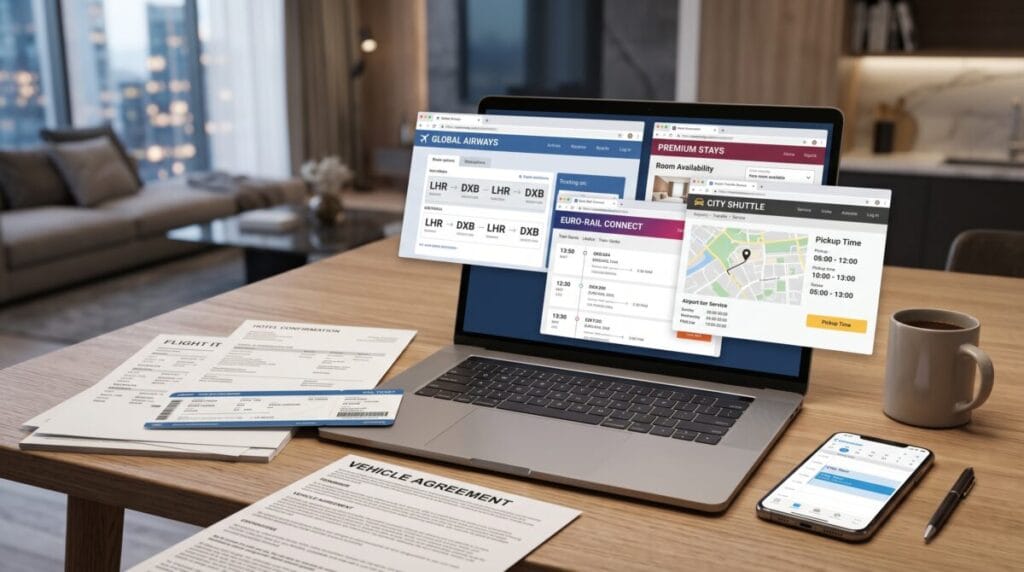
A rail booking platform can simplify multi-operator routes, but the traveler should verify ticket and disruption ownership.
Door-to-door corridor analysis
Five checks before you act
- Origin and destination addresses fixed
- All transfer and terminal time included
- Baggage and seat costs normalized
- Change and missed-service rules compared
- Last connection and disruption alternatives checked
LIVE DECISION ROUTE
Move from the checklist to a verified comparison surface.
ToolRelief separates editorial checks from external transactions. Review the decision criteria here, then confirm live price, eligibility and terms with the selected provider.
The comparison variables
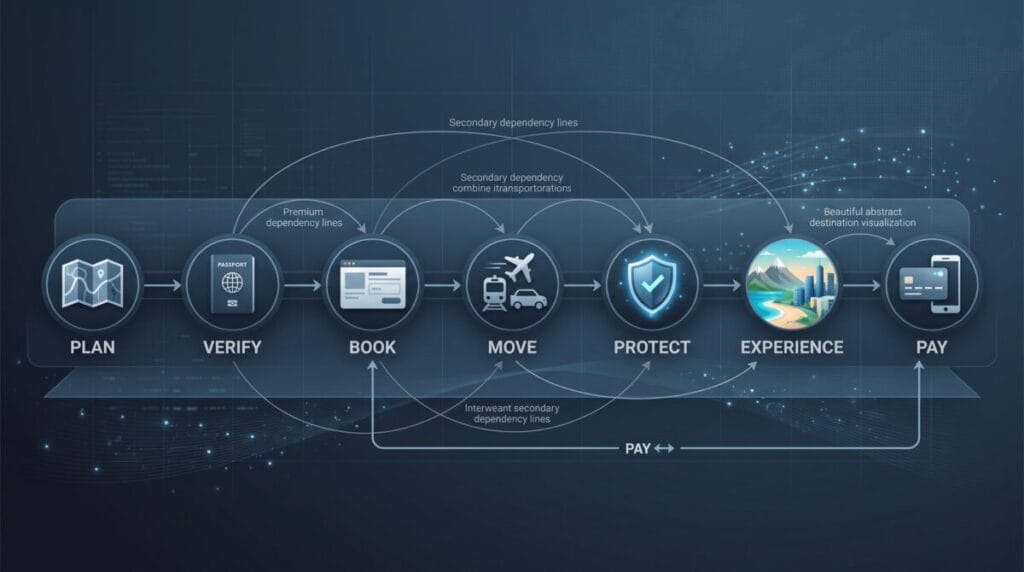
The train vs flight in Europe evidence map separates the variables that change cost, responsibility or recovery.
Door-to-door duration
Add origin transfer, check-in, security, boarding and destination transfer.
Baggage friction
Compare included allowance, handling, stairs and storage.
Ticket flexibility
Review change, cancellation and missed-service rules.
Frequency and recovery
A frequent corridor offers better alternatives after disruption.
Work and comfort
Consider usable time, connectivity, seating and movement.
Practical test case
In a realistic train vs flight in Europe case, for London to Paris, rail begins and ends centrally and avoids airport processing. For Lisbon to Berlin, the distance and transfers make flying more practical. The method produces different answers because the corridors are different.
Action checklist
Use this train vs flight in Europe sequence in order and keep a record of the result.
- Choose exact origin and destination addresses.
- Build a full timeline for rail and air.
- Normalize baggage and seat costs.
- Compare ticket restrictions and next-service options.
- Select based on total time and failure impact.
Trade-off matrix
This train vs flight in Europe matrix compares operating models rather than declaring a universal winner.
| Option | Useful strength | Important limitation | Best fit |
|---|---|---|---|
| High-speed rail | Central access and productive time | Route-specific pricing | Strong city-center corridors |
| Direct flight | Fast over long distance | Airport process and baggage | Weak rail links |
| Night train | Combines travel and accommodation | Limited routes and cabins | Long overnight corridors |
| Coach | Low cost and broad stops | Traffic and longer duration | Budget flexible travel |
Conditions that invalidate a quick answer
A train vs flight in Europe decision should pause when any of these conditions appear.
- Using airborne time as the full flight duration.
- Comparing a central station with a remote airport without transfers.
- Assuming a separate rail connection is protected.
- Ignoring the final train or transit after a late arrival.
Evidence record to save before acting
For this decision, preserve the exact inputs used in the comparison. Record door-to-door duration and note that add origin transfer, check-in, security, boarding and destination transfer. Add the result for baggage friction, because compare included allowance, handling, stairs and storage. Finally, document ticket flexibility: review change, cancellation and missed-service rules. Screenshots, confirmation numbers, policy versions and dated support messages are more useful than memory when a price, schedule or rule changes.
Recovery plan when the preferred option fails
A resilient choice includes a fallback before payment. When the risk is “Using airborne time as the full flight duration,” pause and return to the evidence record. When the warning is “Comparing a central station with a remote airport without transfers,” use the next verified route rather than forcing the original choice. The recovery plan should identify who can correct the problem, what proof is required, how much time is available, and which alternative preserves the most important part of the trip. This is especially important when separate suppliers control connected bookings.
Door-to-door timing worksheet
Write the journey as a sequence of timed blocks: origin transfer, terminal arrival buffer, security or boarding, scheduled transport, expected disruption margin and destination transfer. Add the cost and opening hours of every connection. This worksheet exposes cases where a short flight creates a longer or less recoverable journey than rail, and cases where a weak rail corridor justifies flying.
Verification, independence and responsibility
ToolRelief uses official and first-party material for rules and provider mechanics. Commercial relationships are disclosed and do not convert an unverified claim into a recommendation.
Last editorial verification: July 29, 2026. Recheck time-sensitive rules, prices and provider conditions before publication and before a transaction.
Responsibility boundary: ToolRelief does not issue tickets, collect travel payments, approve visas, underwrite insurance, provide legal advice or operate the listed services.
Questions travelers ask before acting
These train vs flight in Europe questions clarify the final checks before a traveler acts.
At what distance is train always better?
There is no universal threshold. Corridor speed, airport access and schedule frequency matter.
Are rail tickets more flexible?
Some are, while discounted tickets can be highly restricted. Compare the actual fare conditions.
Does rail have passenger rights?
Yes in covered jurisdictions, but the remedy depends on ticket type, delay and operator arrangement.
Decision rule
The final train vs flight in Europe decision should remain defensible after price, responsibility, restrictions and recovery options are checked. ToolRelief narrows the decision; the official authority or external merchant controls the transaction and current terms.
Official and first-party sources reviewed
Source pages and decision boundaries were reviewed on July 29, 2026. Recheck live terms before a transaction.
Last Updated on July 29, 2026
This 12Go review comparison explains when 12Go or Omio is the better route-search starting point and when direct operator booking is safer.
A 12Go booking should be checked for operator, station, connection protection, ticket format, and fare conditions before payment.
WIDER TOOLRELIEF MARKETPLACE NETWORK
Continue beyond one booking decision.
Explore verified partners, global offers, software services and digital products through dedicated ToolRelief commercial surfaces.MULTI-MARKET DISCOVERY
Global Offers Hub
Move across international offers while keeping geography, eligibility and provider responsibility visible.Explore global offersREVIEWED PARTNER ROUTES