A SaaS product audit is a focused review of one application: why the organization pays for it, who uses it, what data and workflows depend on it, whether the controls are adequate, and what should happen before the next renewal. It is narrower than a full portfolio audit and deeper than a simple seat count.
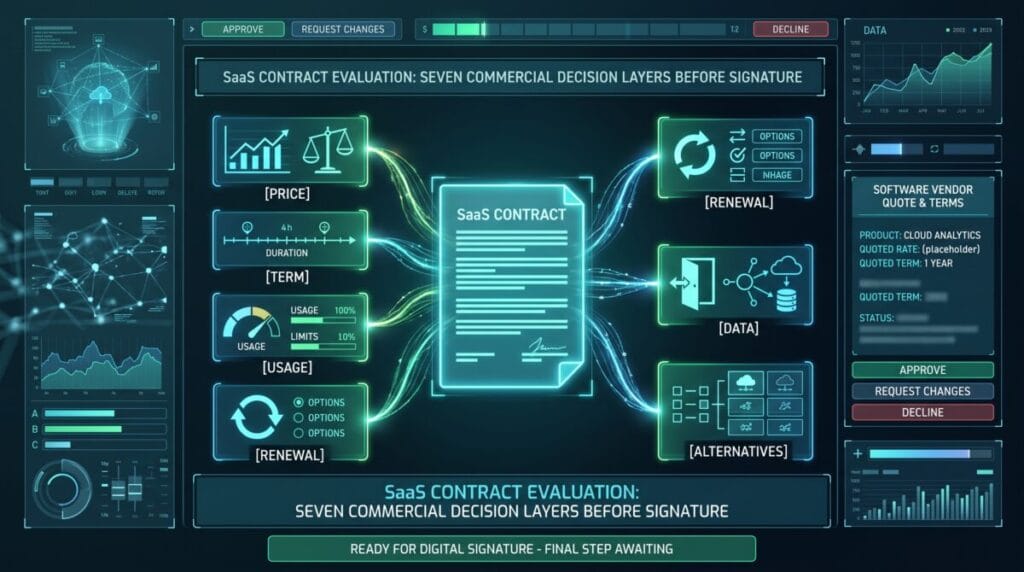
A safer software evaluation path combines a realistic test plan with a documented exit and billing control.
Create the audit record
Record the legal vendor name, product, plan, contract owner, business owner, technical owner, security contact, payment method, renewal date, notice deadline, contract term, seat commitment, usage limits, and current annualized cost. Add links to the order form, terms, data processing agreement, security documentation, and support history.
Do not begin with a cancellation assumption. The audit should produce an evidence-based decision: keep, right-size, renegotiate, consolidate, replace, or retire.
Cost and commercial review
- Reconcile invoices with contracted units and actual users.
- Separate base subscription, AI or usage charges, storage, support, implementation, taxes, and partner services.
- Identify minimum seats, annual prepayment, auto-renewal, price-escalation language, and notice requirements.
- Check whether security, SSO, audit logs, API access, exports, or support require a higher tier.
- Compare the next renewal cost with a realistic right-sized configuration.
Use the Unused SaaS License Cost Calculator for inactive-seat exposure and the SaaS Cost per Employee guide for portfolio context.
Usage and workflow review
Login counts are not enough. Identify meaningful actions: records created, projects completed, reports used, automations executed, customer interactions handled, or other events that reflect business value. Segment active users by role and frequency.
Map upstream inputs, downstream outputs, integrations, manual workarounds, and the consequences of a one-day outage. A lightly used system may still be critical; a frequently opened system may create little value.
Access, security, and data review
- List administrators, privileged roles, service accounts, guests, contractors, and dormant accounts.
- Check SSO, MFA, provisioning, deprovisioning, role design, audit logs, alerting, and recovery procedures.
- Identify the data stored, data owner, sensitivity, retention, backups, export format, deletion process, and regional requirements.
- Review OAuth applications, API keys, webhooks, integrations, and the people who can change them.
- Confirm whether vendor AI features use customer content, and whether controls match the organization’s policy.
Use the OAuth App Review Checklist, API Key Cleanup Checklist, and Software Offboarding Checklist where relevant.
Renewal and exit readiness
Record the cancellation or reduction deadline, required channel, authorized signer, and proof the vendor must receive. Test data export before the deadline. Document replacement requirements, migration order, parallel-run period, user communication, and the date access can be removed.
An exit plan is valuable even when the product is retained. It exposes lock-in, missing exports, undocumented integrations, and operational dependencies before they become urgent.
Decision record
Finish with a one-page decision containing the recommendation, evidence, owner, financial effect, risks, actions, and dates. Label savings correctly: realized savings after invoices change, avoided spend when planned expansion is prevented, and estimated opportunity when action is still pending.
For the portfolio-level process, return to SaaS Cost Optimization Tools and the Software License Audit Checklist.
Build an evidence pack, not a verbal opinion
A product audit should leave a small evidence pack that another manager can review. Include the current order form or plan, recent invoices, active and assigned seats, last meaningful usage date, owner confirmation, connected applications, privileged accounts, data categories, renewal notice window, export test, and the final decision record. Screenshots can support the record, but exportable reports and provider documents are stronger evidence.
Commercial evidence
Contract, invoice, renewal date, notice period, seat floor, add-ons, and expected next-term cost.
Operational evidence
Active users, critical workflows, integrations, automation owners, support burden, and fallback process.
Security evidence
Admins, SSO status, OAuth connections, API keys, retention, subprocessors, and offboarding controls.
Exit evidence
Export formats, deletion process, migration dependency, cancellation confirmation, and post-exit access.
Choose the right audit cadence
High-cost, high-risk, or deeply integrated products deserve quarterly review. Standard team applications can be reviewed before renewal and at least annually. Low-cost tools still need ownership and offboarding controls when they hold customer, employee, payment, or authentication data. Trigger an immediate review after a price increase, merger, security incident, owner departure, major workflow change, or the purchase of a platform with overlapping capabilities.
Record the next review date while the evidence is current. An audit without a future control point becomes a one-time cleanup rather than an operating discipline.
For each retained product, document the minimum acceptable usage, the owner who can approve plan changes, the evidence required for renewal, and the condition that would trigger replacement. This makes the next review faster and reduces the chance that a subscription survives only because no one has authority to challenge it.
Frequently asked questions
How is a SaaS product audit different from a license audit?
A product audit reviews cost, workflow value, security, data, integrations, contract terms, and exit readiness for one application. A license audit focuses more heavily on entitlements, assignments, and usage.
Who should own the audit?
One accountable owner should coordinate input from finance, the business, IT, security, procurement, and administrators.
When should the audit begin?
Start early enough to test exports, collect usage, negotiate, and meet the notice deadline. Thirty days may be insufficient for complex or high-risk systems.
Should an unused application be cancelled immediately?
Not until dependencies, data retention, integrations, contractual notice, and business continuity have been reviewed.
Turn the product review into a documented renewal decision
Use the license audit, renewal checklist, and cost tools to keep evidence, ownership, timing, and exit readiness in one operating sequence.
Last Updated on August 15, 2026