
TOOLRELIEF DECISION INTELLIGENCE
- Decision
- Use Best Time to Buy Software: Buy Now or Wait? to evaluate the software or technology question investigated on this page before taking the next material action.
- Evidence Basis
- Documented product information, published evidence, comparative analysis, direct observation, and clearly labeled models where applicable.
- Best Used For
- Reducing uncertainty before taking the next material action.
- Decision Boundary
- This page provides independent decision support rather than a guaranteed outcome. Product capabilities, pricing, third-party terms, and operating conditions can change.
Updated: August 29, 2026
Best Time to Buy Software: Buy Now or Wait?
Quick Navigation ✔
ToggleThe best time to buy software is not automatically Black Friday, year-end, or the day a vendor displays its biggest discount percentage.
The right time is when the value of buying now is greater than the realistic value of waiting.
That decision depends on six things:
- how urgently you need the software;
- whether today's price is genuinely good;
- what waiting will cost you;
- how likely a better offer actually is;
- what commitment the discount requires;
- and what happens when the subscription renews.
Recent discount data does show a seasonal pattern. As of August 28, 2026, SimplyCodes reported that December had historically produced the deepest percentage-off software coupon environment in its dataset: 54.0% of tracked software store-months with a percentage code reached at least 25% off, compared with 43.3% in August.
But that does not mean every software buyer should wait until December.
A future discount only matters if the expected saving is worth more than the cost, delay, risk, and lost value created by waiting.
This guide applies that principle to SaaS subscriptions, AI tools, business software, security products, creator tools, and other digital services.
If you want to see opportunities that are available now rather than waiting for a seasonal event, check ToolRelief's current commercial opportunity signals.
Quick Answer: What Is the Best Time to Buy Software?
The best time to buy software is when four conditions line up:
- The product already fits your actual need.
- The current price is attractive compared with a legitimate baseline.
- The cost of waiting is lower than the likely additional saving.
- The contract, billing term, and renewal price are acceptable.
If you need the software immediately and a verified offer is already strong, buying now can be smarter than waiting months for a slightly deeper sale.
If the purchase is optional, the current discount is weak, and a credible seasonal event is close, waiting may make sense.
For negotiated team or enterprise software, the best move may be neither “buy now” nor “wait.” It may be compare and negotiate.
What Current Software Discount Data Actually Shows
Software discounts are not distributed evenly throughout the year.
SimplyCodes analyzed 45,611 software store-months across its historical verification data and grouped them by calendar month.
In its August 28, 2026 snapshot:
- December ranked highest for deep percentage-off software codes.
- 54.0% of tracked December software store-months with a percentage code reached 25% off or deeper.
- January ranked second at 49.7%.
- August was the weakest month at 43.3%.
That is useful evidence, but it needs context.
The dataset measures percentage-off promo codes. It does not represent every software pricing mechanism.
It does not automatically capture:
- enterprise negotiated pricing;
- sales-led SaaS contracts;
- fixed-dollar discounts;
- private account offers;
- usage-based pricing negotiations;
- bundled services;
- credits;
- free months;
- renewal concessions;
- or the total long-term cost of the software.
So December may be the strongest historical month for deep promo codes in that dataset without being the universal best buying month for every software category.
The ToolRelief Buy Now / Wait Decision Framework
Instead of asking only when software goes on sale, evaluate the decision through six variables.
1. Need Urgency
How much value are you losing by not having the software now?
Examples of high urgency include:
- a security problem that needs remediation;
- a tool required for a customer project;
- a system blocking a launch;
- a workflow consuming expensive manual labor;
- a required migration;
- a compliance or operational deadline.
In those situations, the biggest cost may not be the subscription.
It may be the cost of doing nothing for another 30, 60, or 90 days.
2. Current Verified Price Advantage
Do not evaluate an offer based only on the percentage shown in the banner.
Compare the current price with:
- the normal monthly price;
- the normal annual price;
- another legitimate current promotion;
- a direct-vendor price;
- a marketplace price;
- a comparable alternative product.
A vendor advertising “30% off” may simply be comparing an annual plan against twelve monthly payments.
That may still be a good price, but it is not necessarily a special buying event.
ToolRelief's Fake Software Discount Signals explains the patterns that can make ordinary pricing look unusually urgent.
3. Cost of Waiting
This is the factor most software deal articles ignore.
Imagine a tool costs $300 today and you expect a future promotion to reduce the price by another $60.
If delaying the implementation for two months costs your business more than $60 in lost time, manual work, missed leads, security exposure, or operational inefficiency, waiting for the discount may be economically irrational.
This is not a claim that every productivity tool generates measurable ROI.
It is a decision rule:
Compare the potential future saving with the value you give up while waiting.
For decisions where ROI matters, ToolRelief's SaaS ROI Calculator can help structure the comparison.
4. Probability of a Better Future Offer
A future discount should not be treated as guaranteed.
Ask:
- Does the vendor reliably run seasonal promotions?
- Is a known sales event close?
- Has the specific plan historically been discounted?
- Is the current promotion already unusually strong?
- Is the vendor changing its pricing model?
- Are you relying on an old deal page rather than current vendor evidence?
The closer the evidence is to the specific product, plan, and buying window, the stronger the case for waiting.
Generic assumptions such as “all SaaS is cheaper on Black Friday” are not strong enough.
5. Commitment Risk
A discount can become more expensive if it forces you into a commitment you would not otherwise choose.
Watch for:
- annual prepayment;
- multi-year contracts;
- minimum seat counts;
- non-refundable plans;
- restricted downgrades;
- bundled products you do not need;
- usage minimums.
The deeper the commitment, the more important product fit becomes.
Saving 25% on the wrong software is not a saving.
6. Renewal Risk
Always ask what happens after the promotional term.
A first-year discount can hide a much more important long-term question:
What will this software cost when the deal is gone?
Check:
- normal renewal price;
- whether the discount repeats;
- automatic renewal terms;
- future seat minimums;
- price-increase clauses;
- upgrade requirements;
- cancellation windows.
ToolRelief's SaaS Price Hike Tracker 2026 covers the broader pricing-pressure side of this decision.
Buy Now, Wait, or Negotiate?
| Situation | Likely Decision | Why |
|---|---|---|
| Immediate operational need + strong verified offer | Buy Now | The cost of delay may exceed possible future savings |
| Optional purchase + weak current discount + major sale close | Wait | You lose little by delaying and have a credible reason to expect better pricing |
| Contact-sales SaaS + multiple seats | Negotiate | Public promotions may matter less than contract terms and quote leverage |
| Large annual discount + uncertain product fit | Wait / Trial | Commitment risk is higher than the apparent saving |
| Current offer near historical low + clear need | Buy Now | Waiting for a marginally better price may not justify the delay |
| Price rising + replacement already planned | Compare Now | The decision is about switching economics, not waiting for a coupon |
| Black Friday is weeks away + purchase is non-urgent | Wait | Seasonal software promotions are close enough to justify observing the market |
When You Should Buy Software Now
Buying now usually makes sense when several of these conditions are true.
You Have a Real Operational Need
The tool fixes a current problem rather than satisfying curiosity or FOMO.
The Current Offer Is Already Competitive
The price compares well with:
- the normal annual plan;
- recent verified pricing;
- comparable alternatives;
- other legitimate routes.
Check ToolRelief's live opportunity analysis when you want to know whether a current commercial signal is already strong enough to act on.
Implementation Takes Time
If onboarding, migration, configuration, integrations, or training will take weeks, waiting for a sale may simply move the cost into a different part of the business.
The Deal Has a Real Deadline
A verified expiration date can justify action.
A fake countdown cannot.
Use ToolRelief's Software Deal Expiration guide to separate real deadlines from artificial urgency.
A Price Increase Is More Likely Than a Better Discount
If the vendor has already announced new pricing or your current plan is about to change, waiting can increase the acquisition cost instead of reducing it.
That should be evaluated from current vendor evidence, not speculation.
When You Should Wait Before Buying Software
Waiting is usually more rational when the purchase is flexible and current information is weak.
You Do Not Need the Tool Yet
If nothing meaningful changes by delaying the purchase, you have more freedom to wait for better evidence or pricing.
The Current “Deal” Is Barely Better Than Normal Pricing
Do not let a sales banner create urgency when the actual saving is small.
A Major Software Sale Window Is Close
Black Friday and Cyber Monday are obvious examples.
ToolRelief is tracking the 2026 market separately in the Black Friday Software Deals 2026 Verified Tracker.
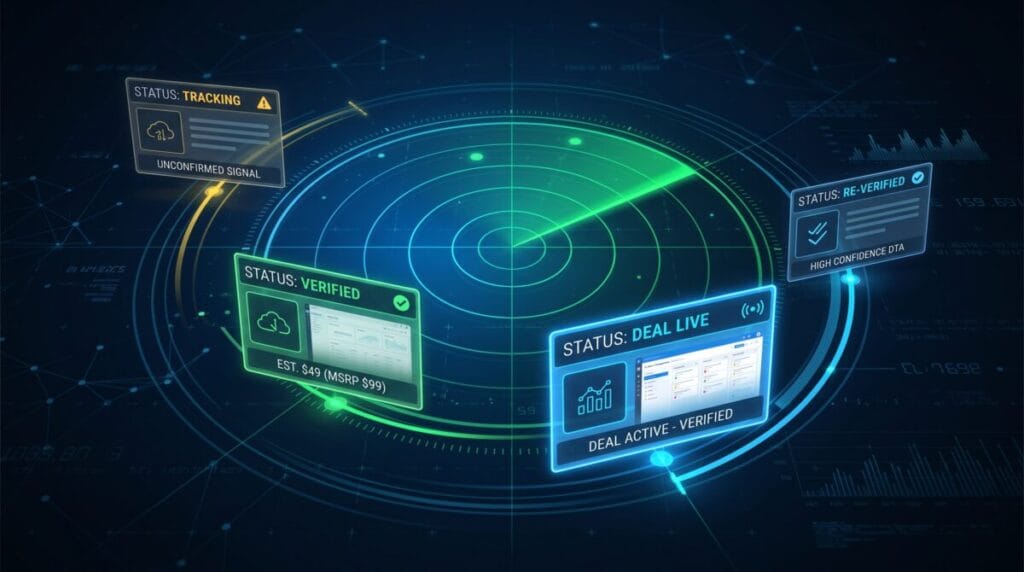
That tracker only moves an offer to a confirmed state when current vendor-attributable evidence exists.
You Have Not Tested the Product
An annual discount does not compensate for buying a platform your team abandons after six weeks.
Use a free plan, trial, demo, sandbox, or limited deployment where available before making a long commitment.
The Renewal Terms Are Unclear
If you cannot determine what happens after the introductory price ends, waiting for clarification may be more valuable than chasing the current percentage.
When You Should Negotiate Instead of Waiting
For sales-led B2B software, timing works differently.
A public coupon may matter far less than:
- seat count;
- contract duration;
- payment schedule;
- usage commitment;
- implementation fees;
- support terms;
- renewal caps;
- data-export terms;
- termination rights.
When you are negotiating a meaningful team or enterprise contract, do not wait three months for a hypothetical 15% campaign if the vendor is willing to improve the entire commercial structure today.
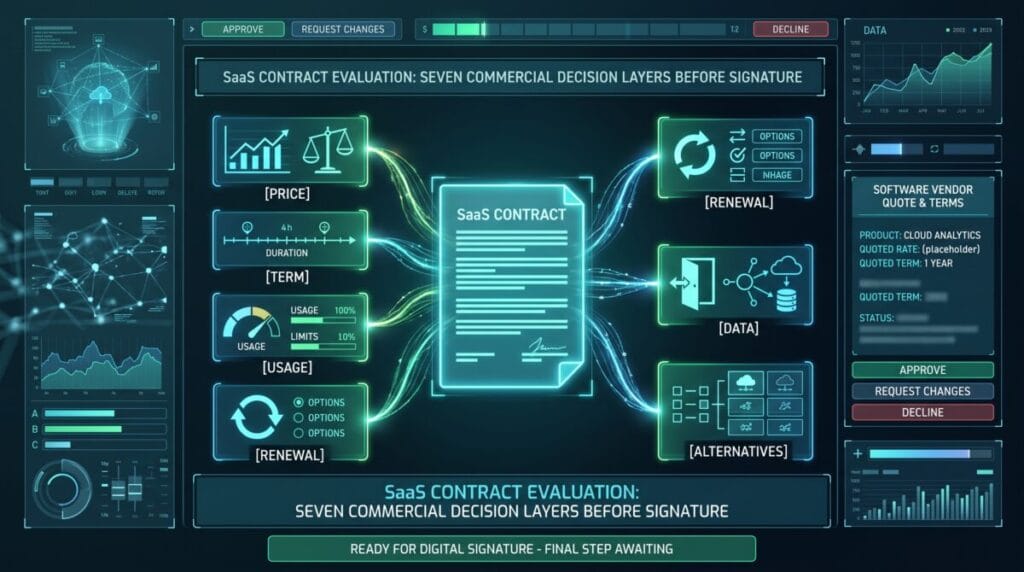
Use ToolRelief's SaaS Contract Negotiation: Pricing and Terms Before You Sign for that decision.
Best Time to Buy Software by Purchase Type
| Software Type | What Usually Matters Most | Timing Strategy |
|---|---|---|
| Self-serve SaaS | Annual pricing, promo codes, trial period, renewal | Compare current verified offer with major sale windows |
| Sales-led SaaS | Contract terms, seats, renewal, implementation | Negotiate rather than relying on public sale calendars |
| AI subscription | Usage limits, model access, credits, overlap | Buy when usage justifies the tier; avoid paying early for unused capacity |
| Usage-based AI/API | Consumption, credits, rate limits, minimum commitments | Focus on usage economics more than headline discounts |
| Security software | Risk urgency, device/user coverage, renewal | Do not delay a needed security control solely for a seasonal discount |
| Creator software | License type, features, upgrade rights, seasonal promotions | Sale windows can matter more if purchase is optional |
| Lifetime license | Version rights, support, vendor durability, refund terms | Evaluate long-term utility rather than subscription-equivalent discount claims |
Is December the Best Month to Buy Software?
December is currently the strongest month in SimplyCodes' historical dataset for deep percentage-off software promo codes, but that is not the same as saying December is always the best month to buy software.
As of August 28, 2026, the dataset showed 54.0% of tracked December software store-months with percentage-off codes reaching at least 25% off.
That evidence is useful for optional purchases where:
- you can wait;
- promo codes are a meaningful part of the vendor's sales model;
- you are buying a self-serve product;
- you do not lose material value by delaying.
It is less useful for a company negotiating an enterprise SaaS agreement, responding to an immediate security problem, or buying software with no meaningful seasonal discount history.
Is Black Friday the Best Time to Buy Software?
Black Friday can be one of the strongest periods for software promotions, but it is still a buying event rather than a universal rule.
A Black Friday deal deserves attention when:
- the promotion is verified;
- the baseline is fair;
- the plan fits your need;
- the commitment is acceptable;
- the renewal price is understood;
- the saving is better than current alternatives.
Do not wait for Black Friday if a strong current offer solves an expensive problem today.
And do not buy on Black Friday simply because the discount percentage is large.
Annual vs Monthly: Does Billing Change the Best Time to Buy?
Yes.
Annual billing often creates a built-in saving compared with paying month by month, even without a seasonal promotion.
That can make sale percentages misleading if the vendor compares its promotional annual plan with twelve full-priced monthly payments.
Before buying, identify three prices:
- normal monthly cost;
- normal annual cost;
- promotional annual cost.
The number that matters for deal quality is often the difference between normal annual cost and promotional annual cost, not the biggest percentage a marketing page can display.
What If the Software Price Is Rising?
A scheduled price increase changes the timing decision.
If you already intend to buy or renew, delaying until after a confirmed increase can erase the value of waiting for a future promotion.
But price-rise announcements should be verified from the vendor before they influence the decision.
ToolRelief tracks broader changes in SaaS Price Hike Tracker 2026.
What If a Software Deal Is About to Expire?
A real expiration date increases the value of making a decision now.
It should not reduce the quality of the decision.
Before acting:
- verify the deadline;
- verify the product and plan;
- check who qualifies;
- compare the normal annual price;
- check renewal terms;
- confirm the product fit.
If you cannot verify those basics, the countdown should not decide for you.
ToolRelief Buy Now / Wait Decision Matrix
| Decision Factor | Buy Now Signal | Wait Signal |
|---|---|---|
| Need | Current operational problem | Optional or future requirement |
| Price | Strong verified price today | Weak or ordinary current discount |
| Delay cost | Waiting causes meaningful loss | Little or no cost to delay |
| Future offer evidence | No strong reason to expect improvement | Credible sale window or vendor pattern is close |
| Commitment | Plan and term already fit | Long contract before product fit is proven |
| Renewal | Future pricing is understood and acceptable | Renewal price or terms are unclear |
A Simple Rule Before You Buy
Ask two questions:
1. What do I gain by buying today?
Then:
2. What do I realistically gain by waiting?
If buying today gives you immediate operational value and the current price is already strong, waiting for an uncertain future discount may be false economy.
If waiting costs almost nothing and a meaningful buying window is close, patience can be rational.
If the deal involves a larger B2B contract, stop thinking like a coupon shopper and start thinking like a negotiator.
Check the Market Before Making the Decision
A calendar should not be your only source of buying intelligence.
ToolRelief's verified deal intelligence and current commercial signals are designed to surface opportunities based on buyer demand, purchase intent, freshness, commercial strength, destination quality, and actual buyer value.
This means a strong opportunity can appear outside Black Friday, December, or another predictable event.
The buying question is not:
“Is this the month when software is cheapest?”
It is:
“Is this a strong enough opportunity for my situation that waiting no longer improves the decision?”
Related ToolRelief Buying Intelligence
- Commercial Opportunity Intelligence — current market signals and verified buying opportunities.
- Black Friday Software Deals 2026 — seasonal verified deal tracking.
- SaaS Contract Negotiation — pricing and terms before signing a larger SaaS agreement.
- Fake Software Discount Signals — identify questionable discount framing.
- Software Deal Expiration — separate real deadlines from artificial urgency.
- SaaS Price Hike Tracker 2026 — watch pricing pressure that can change the decision.
- Software Decision Finder — use when product fit is not yet settled.
Best Time to Buy Software: Bottom Line
The best time to buy software is not defined by one month.
December currently has the strongest historical percentage-off software promo-code pattern in SimplyCodes' dataset, and Black Friday can create meaningful buying opportunities.
But the calendar is only one input.
Buy now when:
- you have a real need;
- the current offer is genuinely strong;
- waiting creates meaningful cost;
- the commitment and renewal terms work.
Wait when:
- the purchase is optional;
- the current deal is weak;
- a credible better buying window is close;
- the cost of waiting is minimal.
Negotiate when the purchase is a sales-led SaaS contract where price, seats, terms, renewal, and exit rights matter more than a public coupon.
The best buying moment is the point where the commercial opportunity and your actual need finally align.
Sources and Methodology
Information reviewed: August 29, 2026.
Seasonality evidence in this guide references SimplyCodes' August 28, 2026 analysis of 45,611 software store-months across its historical verification data. The study measures the share of software stores running percentage-off codes whose deepest code reached at least 25% off in each calendar month.
ToolRelief does not interpret that dataset as proof that every software vendor is cheapest in December. Enterprise negotiations, non-code promotions, fixed-price offers, credits, private contracts, renewals, product fit, implementation timing, and total cost can produce a different optimal buying decision.
The Buy Now / Wait Decision Framework in this article is ToolRelief's decision model for combining timing evidence with buyer-specific commercial factors.