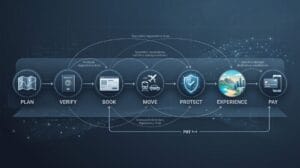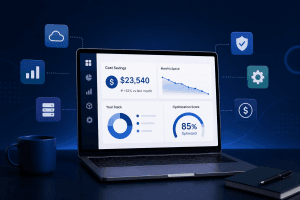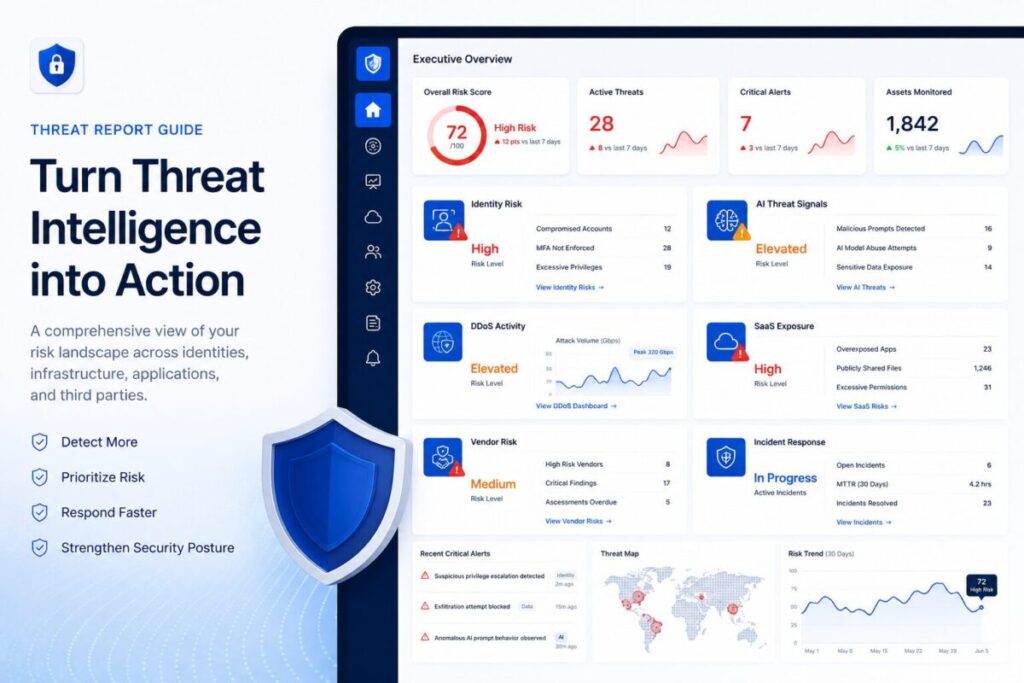
Cloudflare 2026 Threat Report cybersecurity guide dashboard showing identity risk, AI threats, DDoS activity, SaaS exposure, vendor risk, and incident response signals.

Cloudflare 2026 Threat Report Cybersecurity Guide

The Cloudflare 2026 Threat Report shows why cybersecurity can no longer be treated as a background technical issue.

Modern attacks are becoming faster, more automated, more identity-focused, and more connected to the tools businesses use every day.
For small teams, remote teams, SaaS-heavy businesses, and companies experimenting with AI tools, the biggest security risk is often not one missing product.
It is an unclear tool stack.

This Cloudflare 2026 Threat Report Cybersecurity Guide translates the main security lessons into practical questions for business software,
SaaS access, AI tools, vendor risk, backups, and incident response.

Use it alongside ToolRelief’s Cybersecurity Tool Stack Checklist to review where your current tools create coverage, overlap, or hidden gaps.

Cybersecurity Tool Stack Checklist

For the full security resource path, start from the Cybersecurity Hub

TOOLRELIEF DECISION RESOURCES

Latest ToolRelief Guides, Hubs, and Decision Tools

Explore the newest ToolRelief resources for AI tools, cybersecurity, VPN decisions, hosting deals, software risk, and smarter tool stack choices.

AI Hub AI Tools Hub Compare AI calculators, buyer guides, stack tools, and workflow decisions. Framework AI Tools Decision Framework Choose AI tools by cost, privacy, workflow fit, quality, and overlap. Calculator AI Search Visibility Calculator Check whether your content is ready for AI-driven search discovery. Security Hub Cybersecurity Hub Review software access, VPNs, SaaS risk, AI privacy, hosting, and vendors. Checklist Cybersecurity Tool Stack Checklist Review identity, devices, backups, VPNs, SaaS access, and incident response. Threat Guide Cloudflare 2026 Threat Report Guide Turn threat intelligence into practical security and tool stack decisions. Hosting VPS Deal Tracker Review VPS deals by renewal price, backups, support, security, and risk. VPN VPN Deal Watch Check VPN discounts, privacy claims, renewal prices, device limits, and support. AI Hub AI Tools Hub Compare AI calculators, buyer guides, stack tools, and workflow decisions. Framework AI Tools Decision Framework Choose AI tools by cost, privacy, workflow fit, quality, and overlap. Calculator AI Search Visibility Calculator Check whether your content is ready for AI-driven search discovery. Security Hub Cybersecurity Hub Review software access, VPNs, SaaS risk, AI privacy, hosting, and vendors. Checklist Cybersecurity Tool Stack Checklist Review identity, devices, backups, VPNs, SaaS access, and incident response. Threat Guide Cloudflare 2026 Threat Report Guide Turn threat intelligence into practical security and tool stack decisions. Hosting VPS Deal Tracker Review VPS deals by renewal price, backups, support, security, and risk. VPN VPN Deal Watch Check VPN discounts, privacy claims, renewal prices, device limits, and support.

Latest from ToolRelief

Fresh guides, research notes, and practical SaaS waste insights.

Explore ToolRelief

Calculators, audits, templates, playbooks, and decision tools.

What the Cloudflare 2026 Threat Report Means for Tool Stacks

Cloudflare’s 2026 report describes a shift in the threat landscape:
attackers are not only trying to break systems from the outside.
They increasingly exploit trusted access, identity, automation, scale, and weak operational controls.

For a business tool stack, that means security is not only about buying more tools.

It is about knowing:

  • who has access
  • which tools hold sensitive data
  • which vendors can reach your systems
  • which AI tools process private information
  • which accounts have admin rights
  • which alerts are reviewed
  • which backups are tested
  • which tools are unused or duplicated
  • which workflows can be abused

A messy stack makes modern attacks easier.

Why the Cloudflare 2026 Threat Report Matters

The Cloudflare 2026 Threat Report matters because it points to a practical reality:
attackers are adapting faster than many organizations review their tools.

Cloudflare’s public reporting highlights several themes that matter to business operators, not only security teams:

  • identity-based attacks
  • AI-assisted threats
  • DDoS scale
  • SaaS and supply chain exposure
  • email and social engineering
  • bot automation
  • vendor and third-party risk
  • the need for real-time defense

These themes connect directly to everyday software decisions.

If your team uses SaaS tools, AI tools, cloud platforms, remote access, shared workspaces, outsourced vendors,
or customer data platforms, the security question is not abstract. It sits inside the tool stack.

If privacy tools are part of your response, compare discounts and plan risk with VPN Deal Watch

Cloudflare 2026 Threat Report Lesson 1: Identity Is the New Front Door

One of the most important lessons from the Cloudflare 2026 Threat Report is that access matters as much as perimeter defense.

Attackers do not always need to “hack in” if they can log in with stolen credentials, abused sessions, weak MFA, old accounts, or social engineering.

For ToolRelief readers, this means every tool stack review should ask:

  • Are passwords managed?
  • Is MFA enabled on high-risk tools?
  • Are admin accounts limited?
  • Are former employee accounts removed?
  • Are shared accounts controlled?
  • Are vendor accounts reviewed?
  • Are AI tools connected to sensitive systems?
  • Are OAuth apps and integrations reviewed?

Use ToolRelief’s Cybersecurity Tool Stack Checklist to review identity, admin access, and vendor exposure

Cloudflare 2026 Threat Report Lesson 2: AI Changes the Threat Model

AI tools can improve productivity, but they can also create new risks.

The risk is not only that attackers use AI.
The risk is also that businesses adopt AI tools faster than they update policies, data rules, vendor review practices, and access controls.

AI-related tool stack questions include:

  • Which AI tools are employees using?
  • Are employees pasting sensitive data into AI tools?
  • Are AI tools connected to documents, email, CRM, code, or customer data?
  • Does the vendor use submitted data for training?
  • Are there admin controls?
  • Are there team policies?
  • Is output reviewed before use?
  • Are AI-generated workflows creating hidden operational risk?

For AI buying decisions, use the AI Tool Buyer Guide

For AI subscription overlap, use the AI Subscription Waste Calculator

Cloudflare 2026 Threat Report Lesson 3: DDoS and Bot Scale Are Not Just Enterprise Problems

Cloudflare’s public 2026 reporting discusses very large-scale DDoS activity and automated threats. Even if a small business is not the primary target, it may still depend on vendors, hosting providers, SaaS platforms, APIs, and infrastructure that are exposed to internet-scale abuse.

Tool stack questions:

  • Is the website behind reliable infrastructure?
  • Does hosting include DDoS protection?
  • Are critical services monitored?
  • Are uptime and DNS providers documented?
  • Are admin accounts protected?
  • Is there a recovery plan if a provider goes down?
  • Are customer-facing tools dependent on a single vendor?

If hosting or VPS costs are part of your stack review, connect this to ToolRelief’s SaaS Cost Optimization Tools

Cloudflare 2026 Threat Report Lesson 4: SaaS and Supply Chain Risk Are Connected

A business may have strong internal habits but still be exposed through vendors, SaaS tools, integrations, plugins, and connected apps.

Modern tool stacks often include:

  • CRM tools
  • project management tools
  • finance tools
  • HR tools
  • support tools
  • analytics tools
  • AI tools
  • automation tools
  • file storage
  • password managers
  • hosting and DNS providers
  • browser extensions
  • WordPress plugins
  • third-party scripts

Each one can create risk if access, ownership, and review cadence are unclear.

Use the Business Software Audit Checklist to review software ownership and usage

Cloudflare 2026 Threat Report Lesson 5: Security Tools Need Owners

A security tool is not useful just because it exists.

A password manager, backup tool, endpoint tool, VPN, monitoring service, or email security tool needs:

  • an owner
  • a review schedule
  • clear alerts
  • documented access
  • renewal tracking
  • usage review
  • offboarding rules
  • escalation steps

Without ownership, the tool may create comfort without control.

Use the Cybersecurity Tool Stack Checklist to assign ownership and review cadence


Cloudflare 2026 Threat Report Tool Stack Review Framework

Use this framework to turn threat intelligence into a practical review.

1. List Critical Tools

Start with the tools that matter most:

  • identity provider
  • email
  • file storage
  • password manager
  • CRM
  • finance tools
  • website hosting
  • DNS
  • AI tools
  • automation platforms
  • endpoint protection
  • backup systems

2. Mark Sensitive Data

For each tool, ask:

  • Does it hold customer data?
  • Does it hold employee data?
  • Does it hold financial data?
  • Does it hold source code?
  • Does it hold credentials?
  • Does it connect to other systems?

3. Review Access

Check:

  • admins
  • users
  • vendors
  • contractors
  • integrations
  • old accounts
  • shared accounts

4. Review Protection

Check:

  • MFA
  • password policy
  • backup
  • alerts
  • recovery
  • device controls
  • vendor security documentation

5. Review Overlap and Waste

Security overlap can create confusion. Unused tools can create cost and access risk.

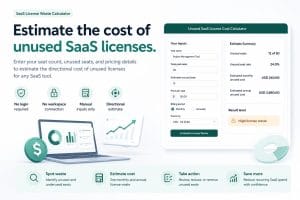
Use the Unused SaaS License Cost Calculator to identify paid but unused software

6. Assign Next Action

For each tool, choose:

  • keep
  • restrict
  • review
  • replace
  • consolidate
  • cancel
  • monitor

If infrastructure, hosting, or DDoS exposure is part of the concern, review the VPS Deal Tracker before choosing or renewing hosting. 

Cybersecurity Guide Scorecard

Score each area from 0 to 5.

AreaQuestionScore
IdentityAre logins, MFA, admins, and old accounts controlled?0–5
AI ToolsAre AI tools governed and reviewed for data risk?0–5
SaaS AccessAre SaaS users, integrations, and vendors reviewed?0–5
InfrastructureAre hosting, DNS, uptime, and DDoS exposure understood?0–5
BackupsAre backups protected and tested?0–5
MonitoringAre alerts owned and reviewed?0–5
Vendor RiskAre third-party tools and contracts reviewed?0–5
Incident ResponseDoes the team know what to do during an incident?0–5

Maximum score: 40

0–15: High Exposure

Your tool stack may have major security and ownership gaps.

16–27: Basic Control

Some protections exist, but access, vendors, AI tools, or recovery may need work.

28–35: Managed Risk

Your stack is reasonably controlled, but should be reviewed for overlap, stale access, and vendor exposure.

If AI tools are part of the risk, use the AI Tools Hub to review decision frameworks, calculators, and subscription overlap. 

36–40: Strong Control

Your stack appears well managed. Keep reviewing access, backups, vendors, AI use, and incident response.

Practical Next Steps After Reading the Cloudflare 2026 Threat Report

Do not respond to threat intelligence by buying random tools.

Start with these actions:

  1. Review MFA on critical accounts.
  2. Remove old users from SaaS tools.
  3. List AI tools used by the team.
  4. Review admin accounts.
  5. Check backup coverage.
  6. Identify tools with sensitive data.
  7. Review integrations and connected apps.
  8. Assign owners to security tools.
  9. Document incident response steps.
  10. Schedule the next review.

Run the Cybersecurity Tool Stack Checklist after this guide

How ToolRelief Uses This Kind of Threat Intelligence

ToolRelief does not treat reports like the Cloudflare 2026 Threat Report as abstract news.

We use them as signals for practical tool decisions:

  • Which tools should a business review?
  • Which risks connect to SaaS waste?
  • Which AI tools need policy review?
  • Which vendors deserve closer attention?
  • Which checklists or calculators should exist?
  • Which pages need freshness updates?
  • Which tool categories deserve buyer guides?

That is the purpose of the ToolRelief Universal Tool Intelligence approach:
turning market and security signals into useful pages, tools, checklists, and decision support.

Learn more about the ToolRelief system

Need Help Reviewing Your Tool and Security Stack?

The Cloudflare 2026 Threat Report is a reminder that security, software access, vendor risk, AI tools, and SaaS cost are connected.

ToolRelief helps teams review tool stacks, reduce waste, identify overlap, and make clearer software decisions.

FAQ

What is the Cloudflare 2026 Threat Report?

The Cloudflare 2026 Threat Report is Cloudflare’s threat intelligence report covering major security trends such as AI-driven threats,
identity attacks, DDoS activity, SaaS and supply chain exposure, and modern cyberattack patterns.

Why does the Cloudflare 2026 Threat Report matter for small businesses?

Small businesses often rely on SaaS tools, cloud software, AI tools, vendors, plugins, hosting, and remote work systems.
Those tools create risk if access, ownership, backups, and vendor review are unclear.

Does this guide replace Cloudflare’s official report?

No. This page is a ToolRelief interpretation for software and tool stack decision-making.
Readers should refer to Cloudflare’s official report for the original threat intelligence.

What is the biggest lesson from the Cloudflare 2026 Threat Report?

The biggest practical lesson is that security is connected to access, identity, tools, vendors, automation, and operational ownership.
Buying more tools is not enough if the stack is unclear.

How does AI affect cybersecurity risk?

AI can help attackers scale phishing, social engineering, automation, and reconnaissance. It can also create internal risk when teams use AI tools without data rules or vendor review.

What should I review first?

Start with MFA, admin access, old accounts, backups, AI tool usage, SaaS integrations, vendor access, and incident response steps.

Should I use the Cybersecurity Tool Stack Checklist with this guide?

Yes. This guide explains the risk context. The checklist helps you review your actual security tools, SaaS access, backups, vendors, monitoring, and ownership.

Does ToolRelief provide cybersecurity services?

ToolRelief provides decision-support resources, calculators, checklists, buyer guides, and review paths for software and tool decisions.
It does not replace professional security, legal, or compliance advice.

Source Notes

```
ToolRelief software spend decision system logo
ToolRelief System Page Independent Review Layer
Built and maintained by ToolRelief

This page is part of ToolRelief’s software spend decision system. ToolRelief builds practical calculators, signal boards, templates, and review paths that help teams evaluate SaaS waste, renewal pressure, unused licenses, AI tool overlap, pricing evidence, and software cost visibility before making buying or renewal decisions.

ToolRelief is founded by Waleed Al-Qasem, founder of Nexio Global. The platform is designed to support clearer software decisions for founders, operators, finance teams, and small businesses.

```
ToolRelief is independent. References to tools, vendors, or software categories are for editorial, educational, and decision-support purposes only. No sponsorship, endorsement, or formal partnership is implied unless clearly stated.
ToolRelief Articles Read SaaS waste, AI tools, pricing, workflow, and research guides
Scroll to Top